1959 - Herb Uhl Trail Super Cub
The CT90 traces its origins to Herb Uhl, a motorcycle dealer in Boise, Idaho, who modified the newly imported Honda Super Cub to increase its appeal to his customers, many of whom wanted a cheap and robust motorcycle to get about in the surrounding hills.
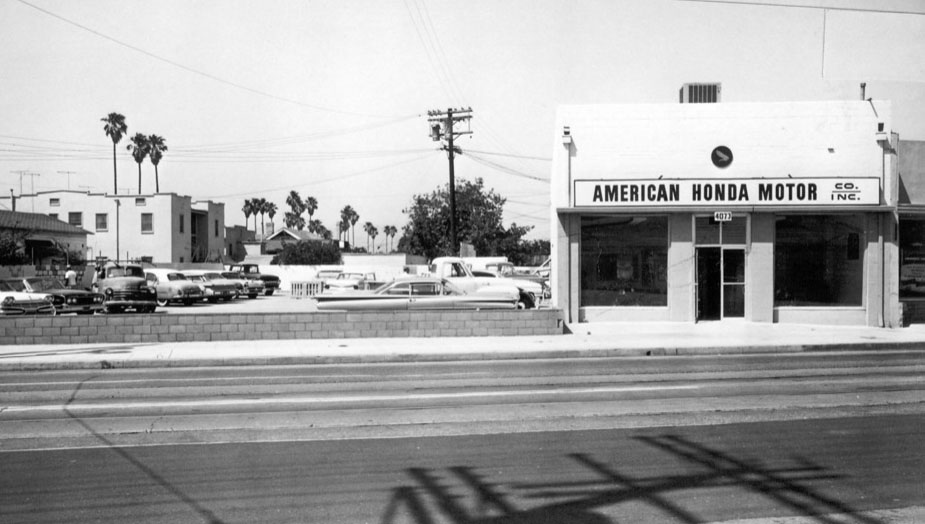
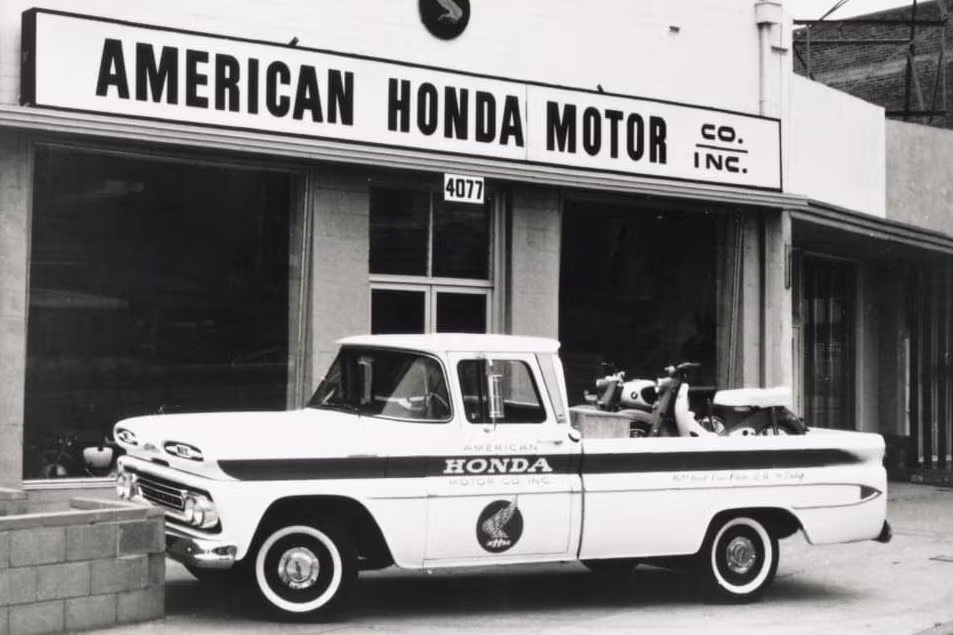
American Honda Motor Company was established in California in 1959. You can see a Super Cub poking out the back of the pickup truck on the right
His initial modifications involved removing the bulky leg-shield, adding a 82-tooth overlay sprocket to help with hill climbing, and fitting a custom 'peashooter' exhaust to improve ground clearance.
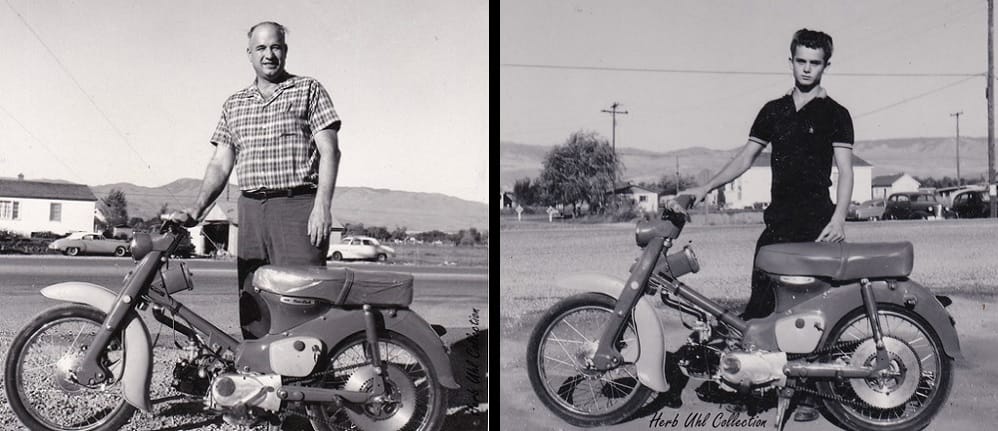
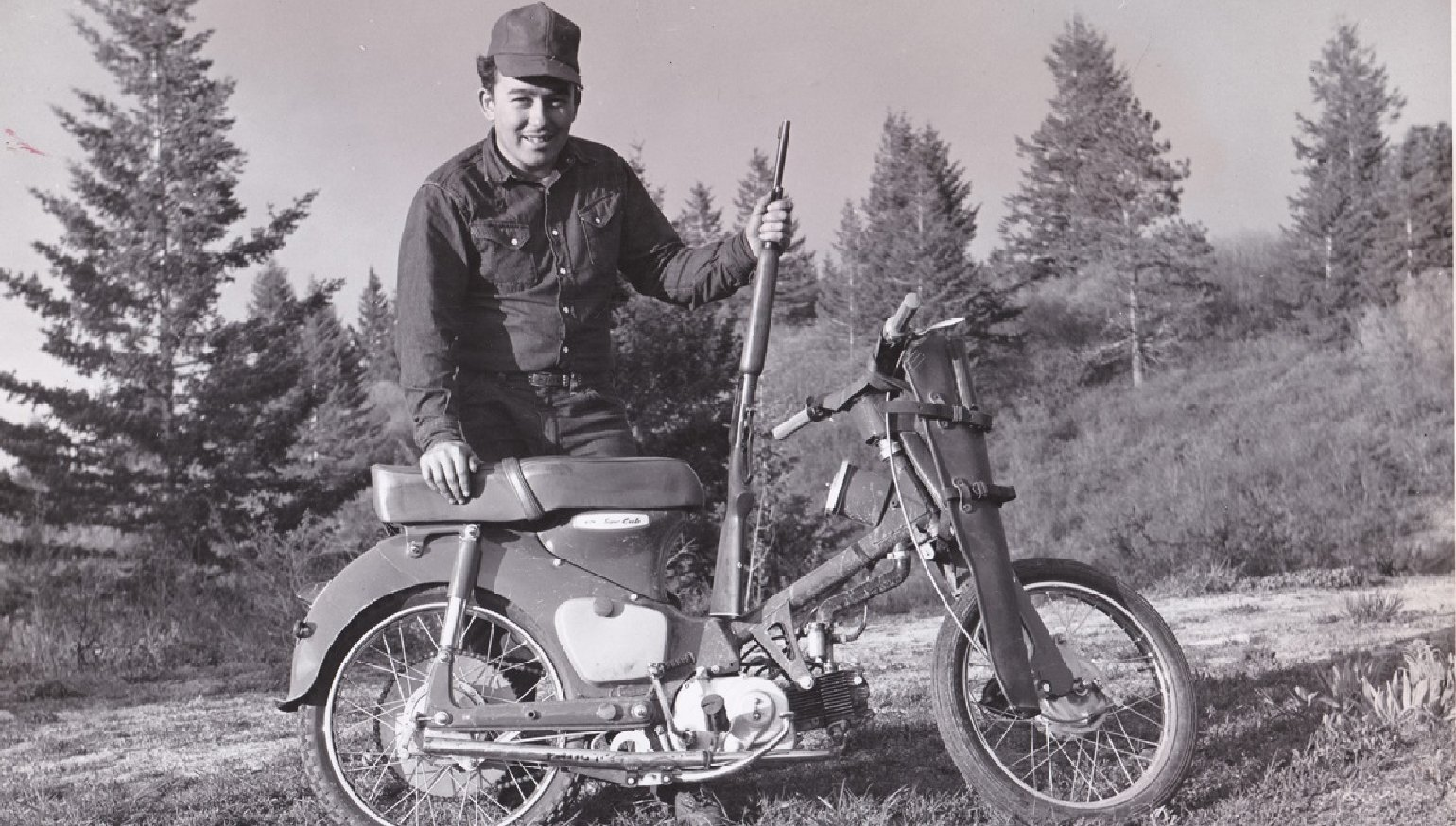
left / centre - some of the earliest modified Super Cubs sold by Herb Utl / right - the man himself with a later version which included knobbly tyres (the front mudguard was removed to better accommodate the larger tyre). Photos from the Herb Utl collection
These modified bikes were based on the very first Super Cub - the 1958 50cc C100. This was launched in the US in 1959, where it was known as the CA100 to distinguish it from the Japanese domestic market version that had a single seat and came with turn signals.
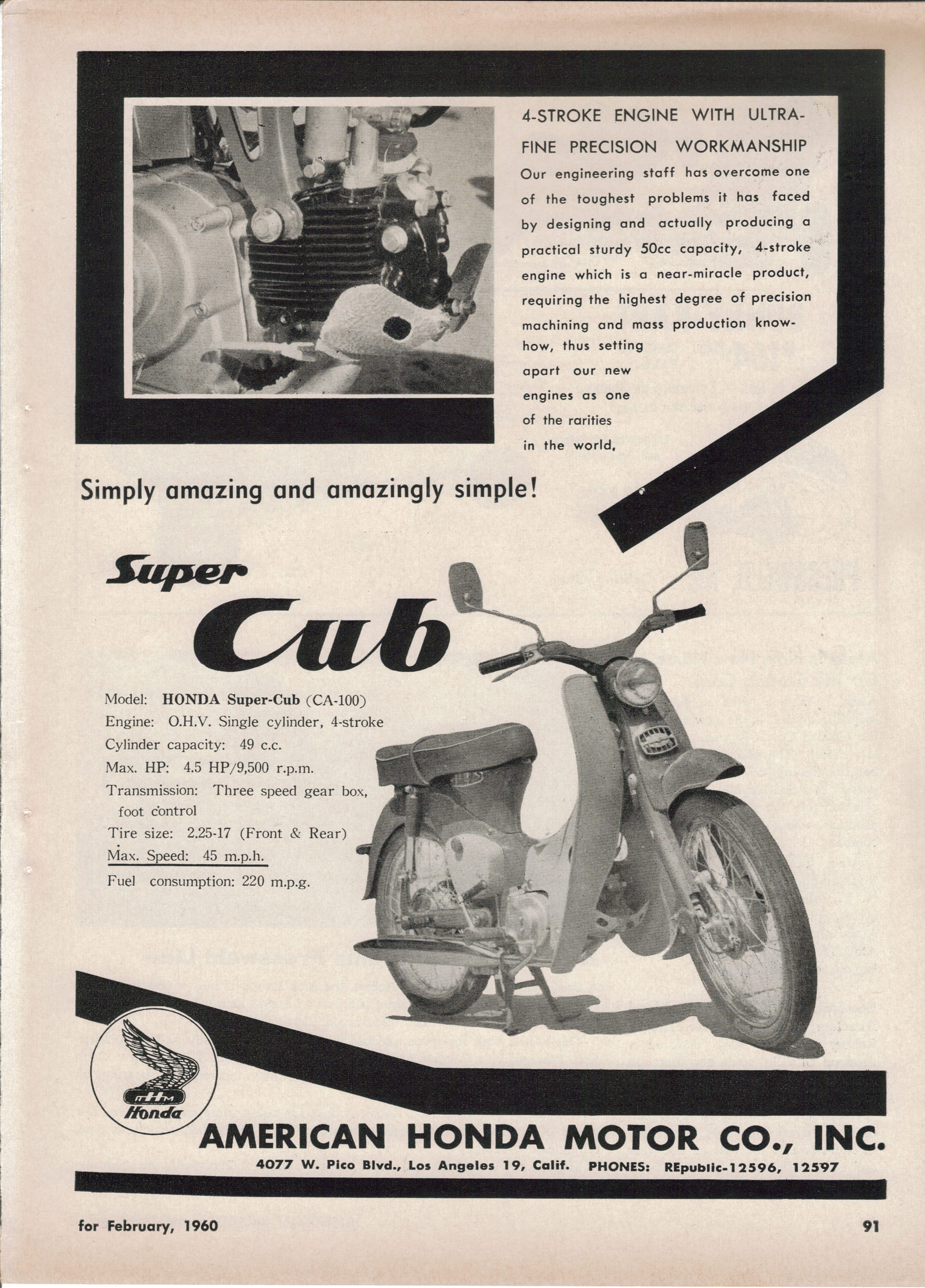
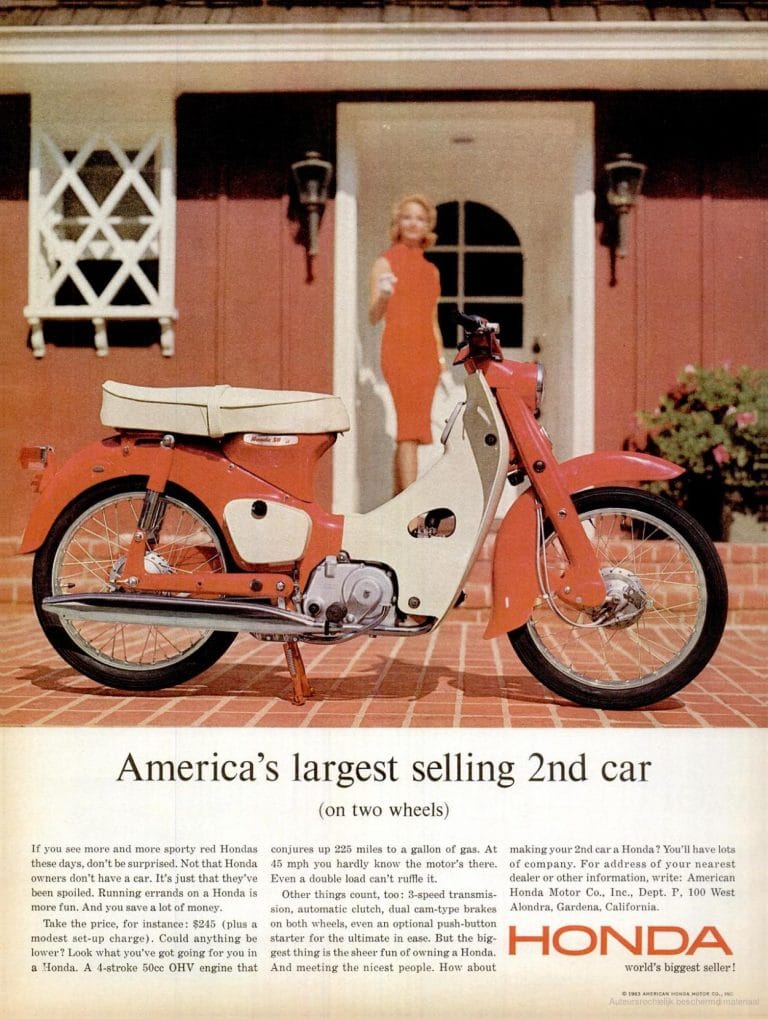
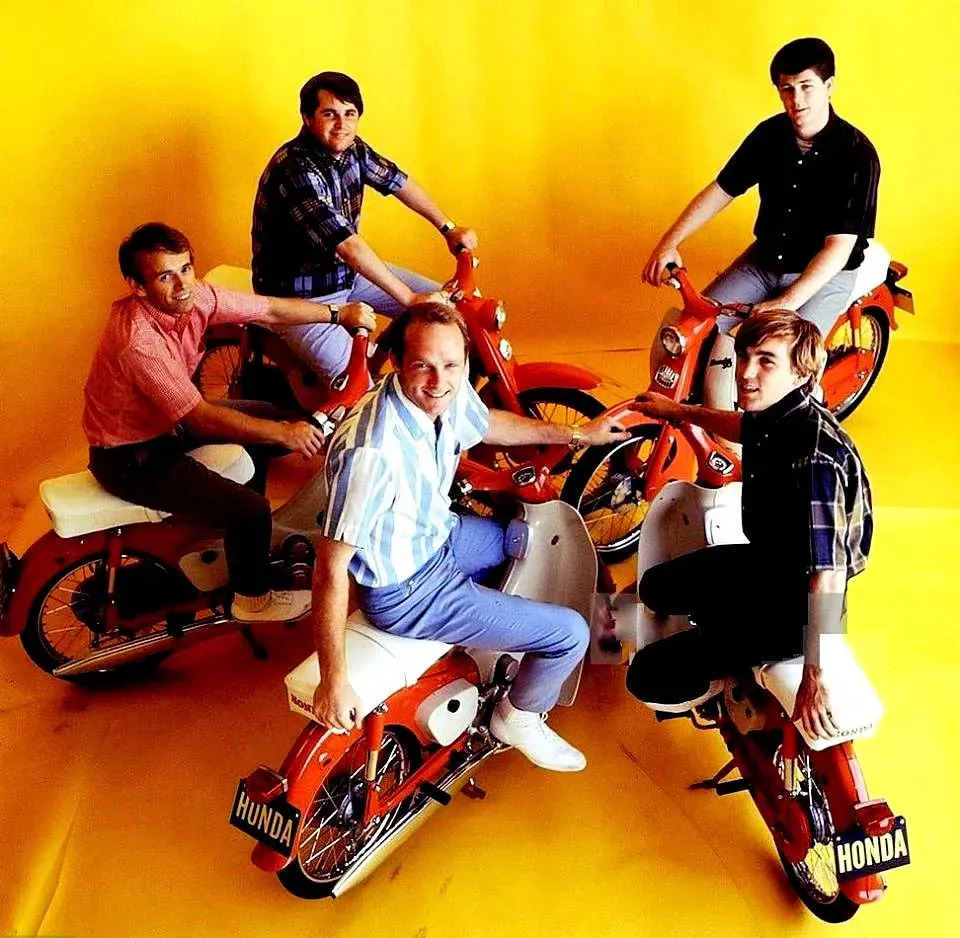
The super cub was an instant success - and very cool. Honda USA dropped the Super Cub branding in the early 1960s, using the 'Honda 50' monicker instead, therefore avoiding a row with Triumph whose (Tiger) Cubs were already popular in the UK and US.
You can hear Herb describe his involvement in creating the legendary CT90 in this video
1961 - The first Trail 50 (CA100T)
By 1960 Honda America had got wind of the surprisingly high volume of Super Cubs being sold out of Herb's shop and asked him to send one of the modified trial bikes to California. Honda USA duly sent this on to Japan with a request to build a production version and, by March 1961, Honda's new Trail 50 was offered to Honda dealers across America. This initial release was a pretty faithful copy of Herb's original changes and was an immediate success.
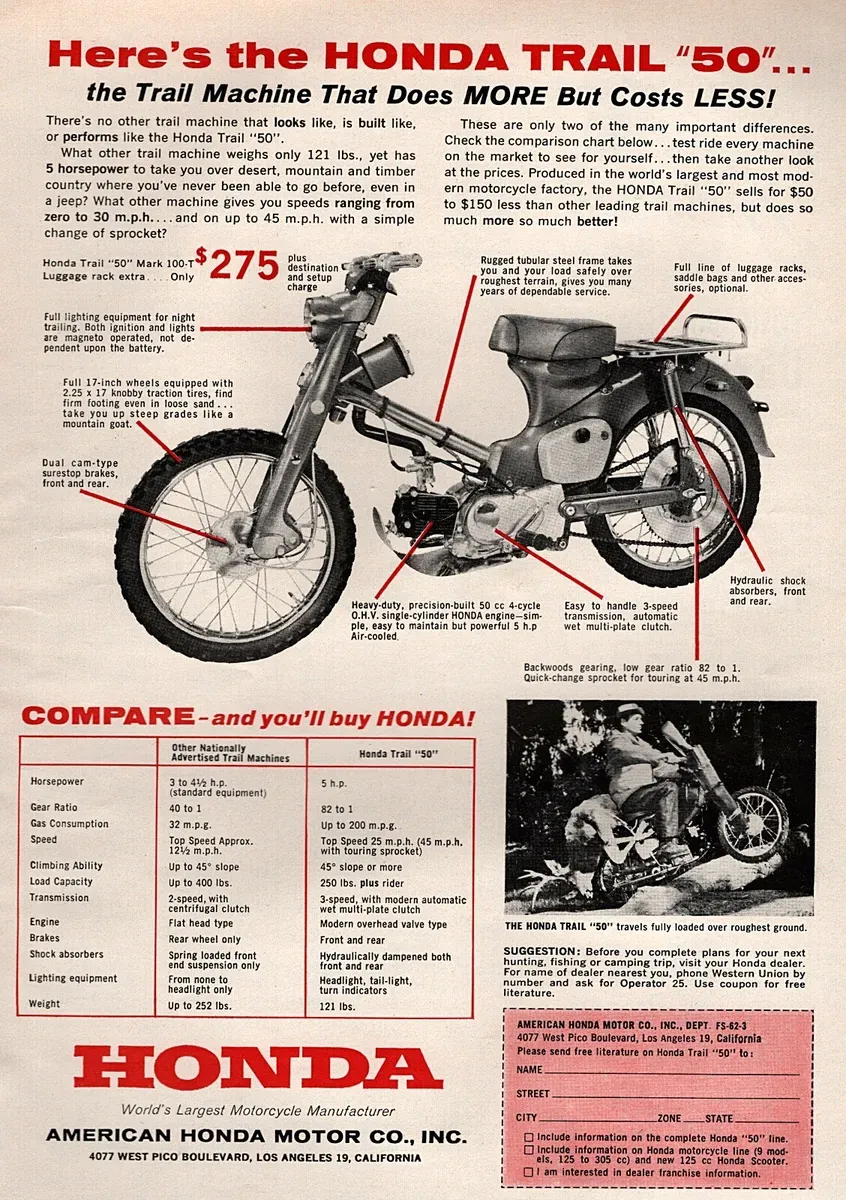
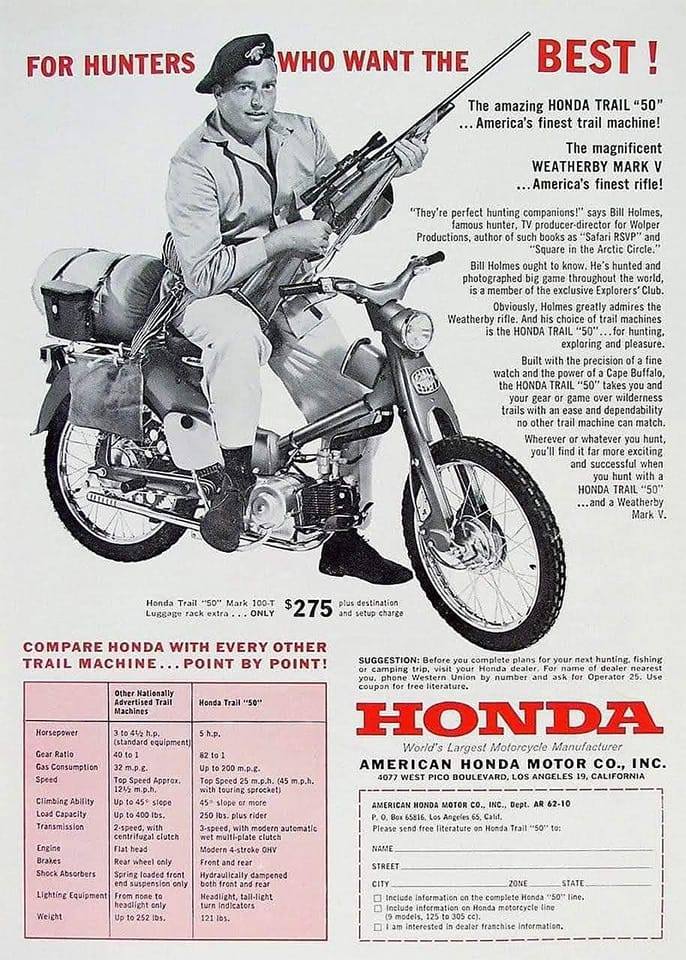
Honda's first production Trial bike - 5 horsepower with three-speeds and automatic clutch. Like Uht's custom version, it came with knobby tires; the original Honda 50’s leg shield and front fender were removed for better off-road utility and a double rear sprocket permitted changes to the overall gearing. A large chrome rack was added and a skid plate to protect the engine were available as optional extras.
The model went through a number of revisions, eventually becoming the popular CT brand. These changes are described below.
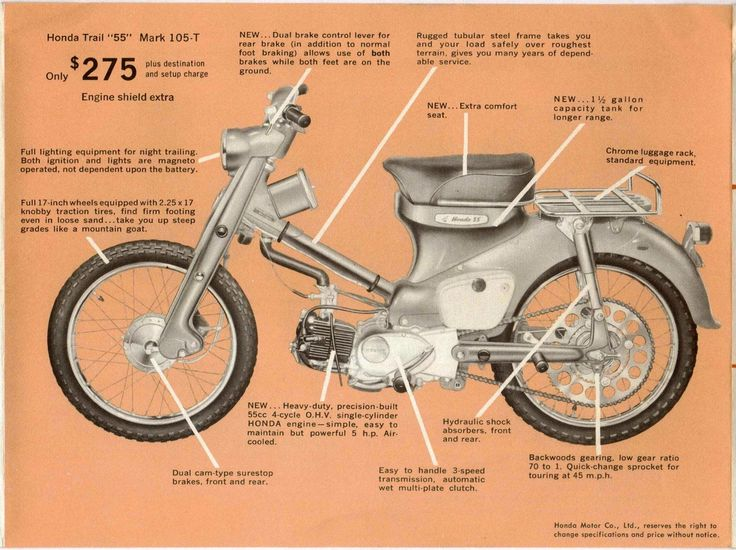
1962 - Trail 55 (CA105T)
1962 saw the introduction of a slightly larger (55cc) engine to the Honda 50/Trail range. The Trail 55 also got a larger gas tank and the addition of a hand operated rear brake lever on the left hand handlebar (handy when paddling down hill). The carrier rack was now fitted as standard.
You can read Cycle World's approving review below.
 Contributors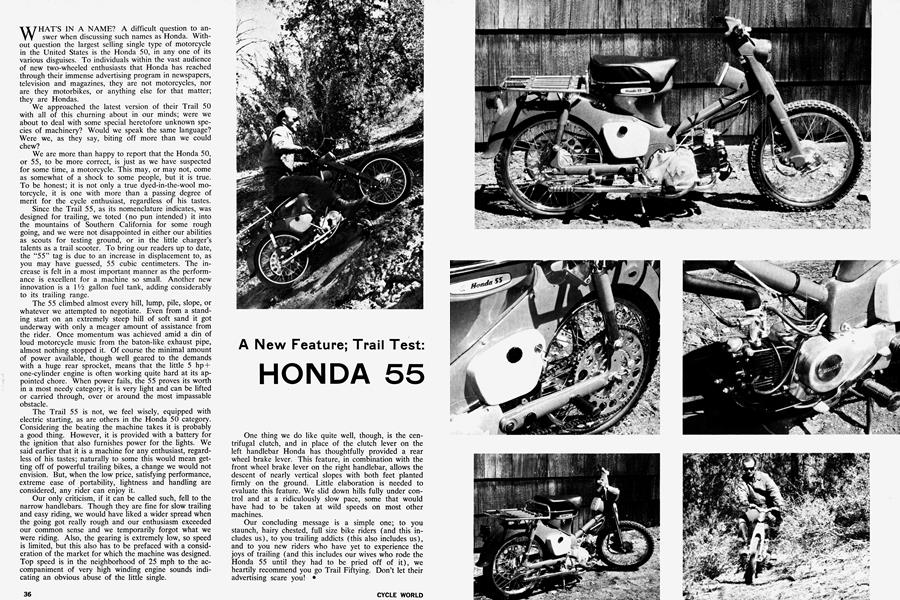
1963 - Trail 55 mark II
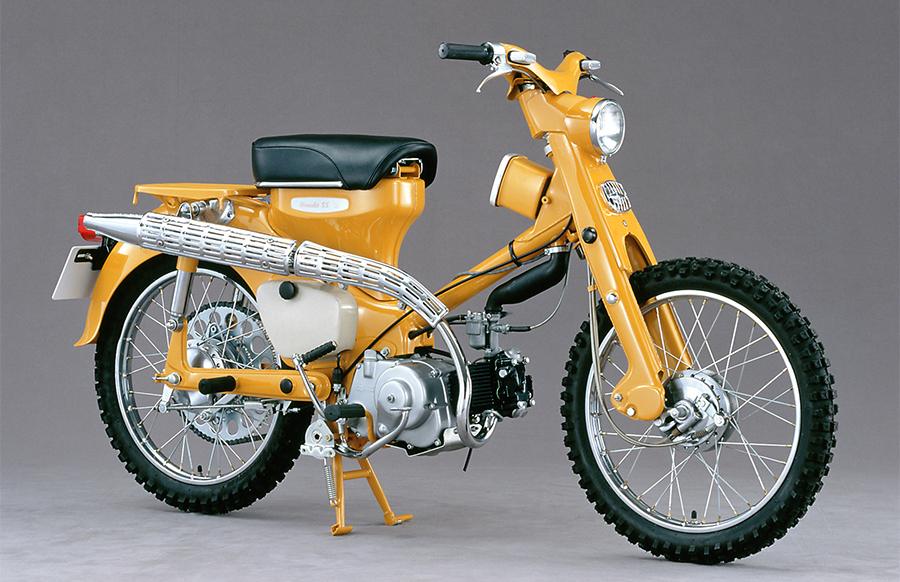
In 1963, an upward-tilted muffler was fitted to improve clearance and to allow the bike to pass through shallow water.
1964 - Trail 90 (CT200)
A major upgrade came in 1964 when Honda fitted their new 87cc overhead valve (push rod) engine and incorporated the same 4-speed gearbox used in the C200 Benly.
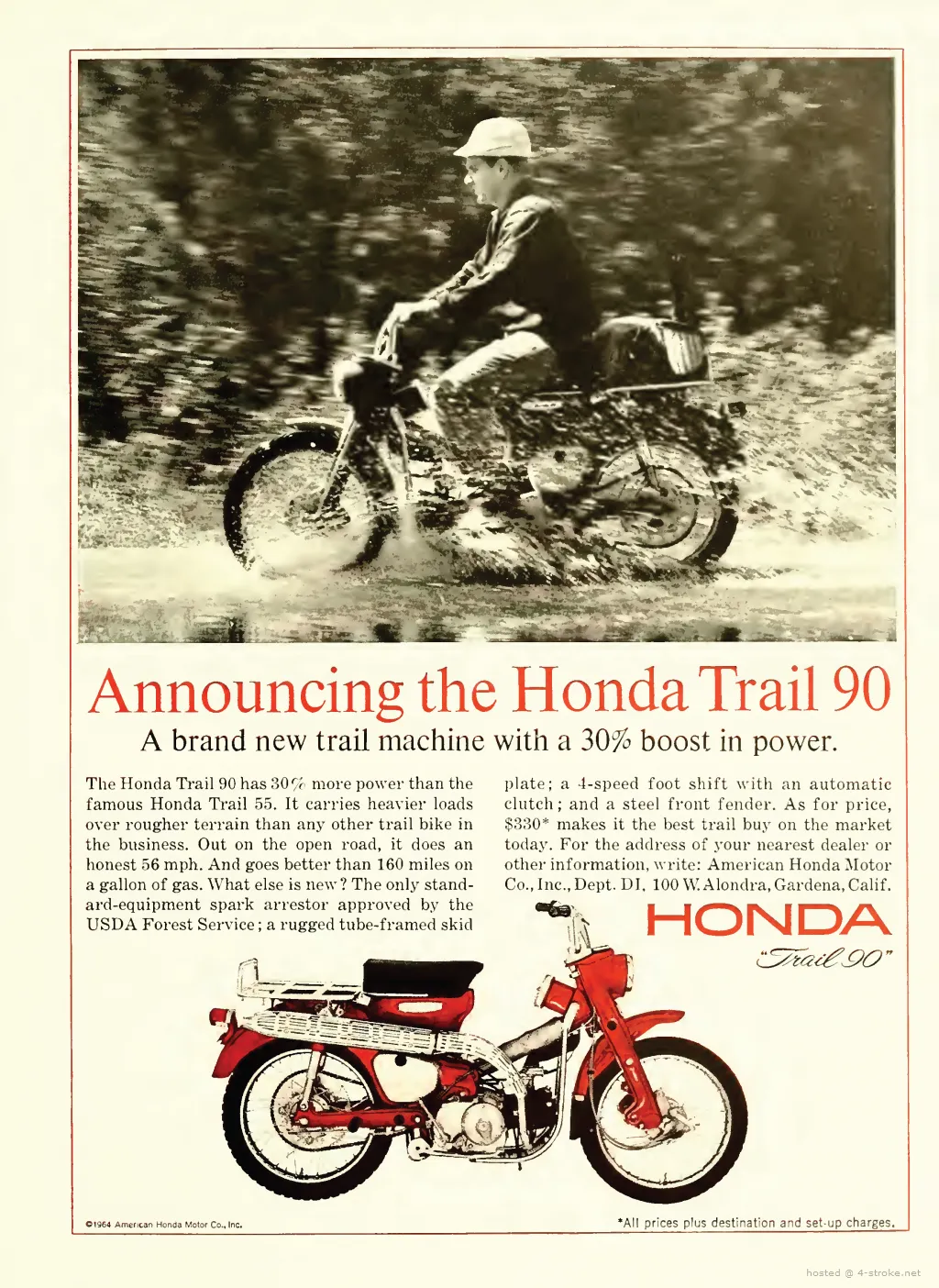
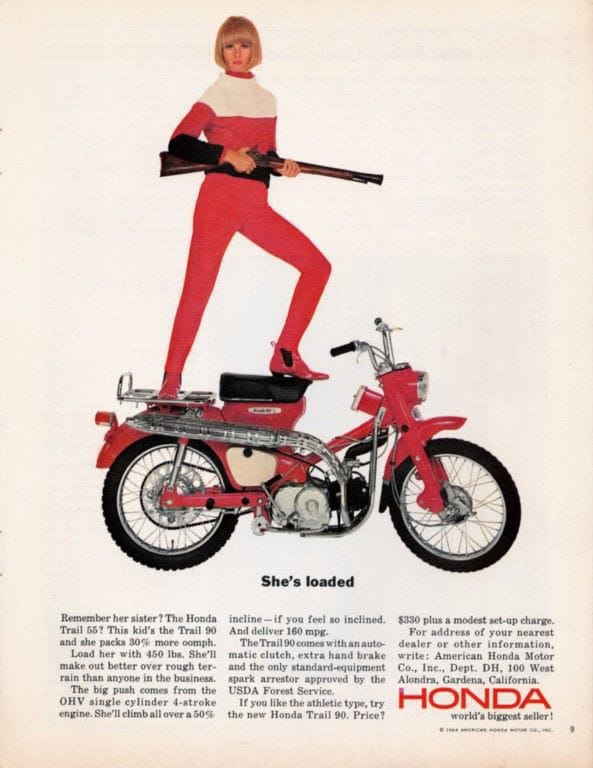
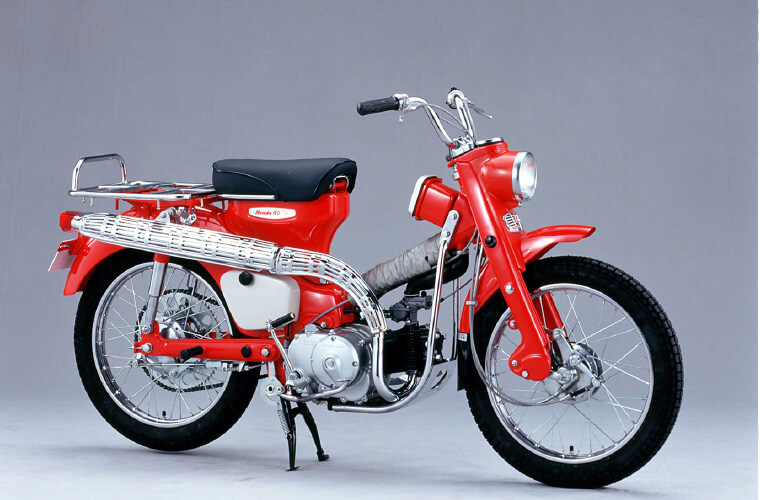
the first Trail 90 - 30% more power and 4 speed gears
This model also got a more robust skid plate to protect the engine and was the first model to be fitted with a Krizman spark arrestor.
1966 - CT90 K0 (early)
In 1966, Honda unveiled their newly designed 89cc overhead cam engine - this was fitted to a number of models, including the CL90, C90 (Super Cub) and S90 and a slightly detuned version was fitted to the Trail 90, which from this point forward was christened the CT90.
This engine, with one notable modification - the addition of a sub transmission (described below) - was used until the end of production in 1979. The 1966 bike is the first model to follow Honda's K series numbering convention, which went as follows:
1967 - CT90 KO (late)
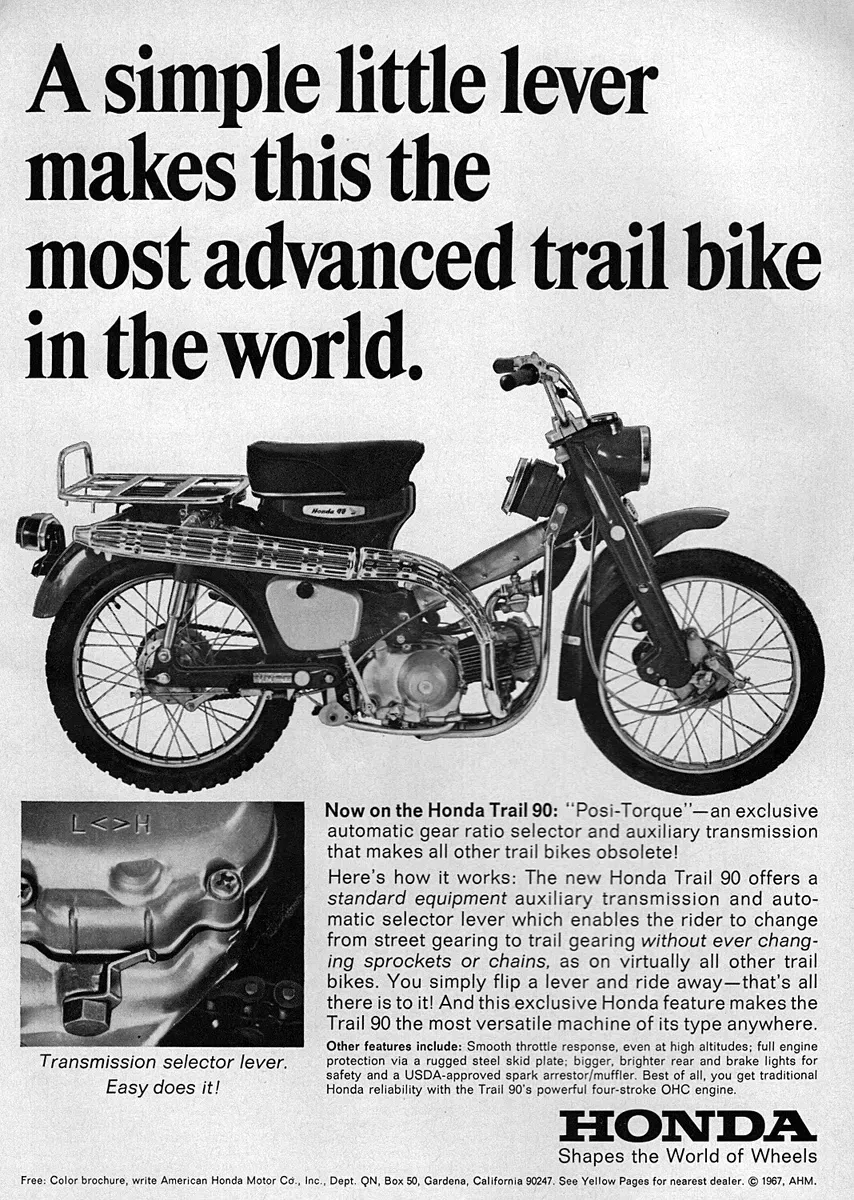
1967 saw the introduction of an important innovation, the new posi-torque sub-transmission that replaced the Trail 90’s double sprockets. This brilliant invention allowed riders to switch between low and high gear ranges with the flip of a lever, rather than faffing around with chain links and sprockets.
1969 - CT90 K1
A major update was made in 1969 - the new model included a number of improvements and saw the first significant departures from the bike's Super Cub heritage.
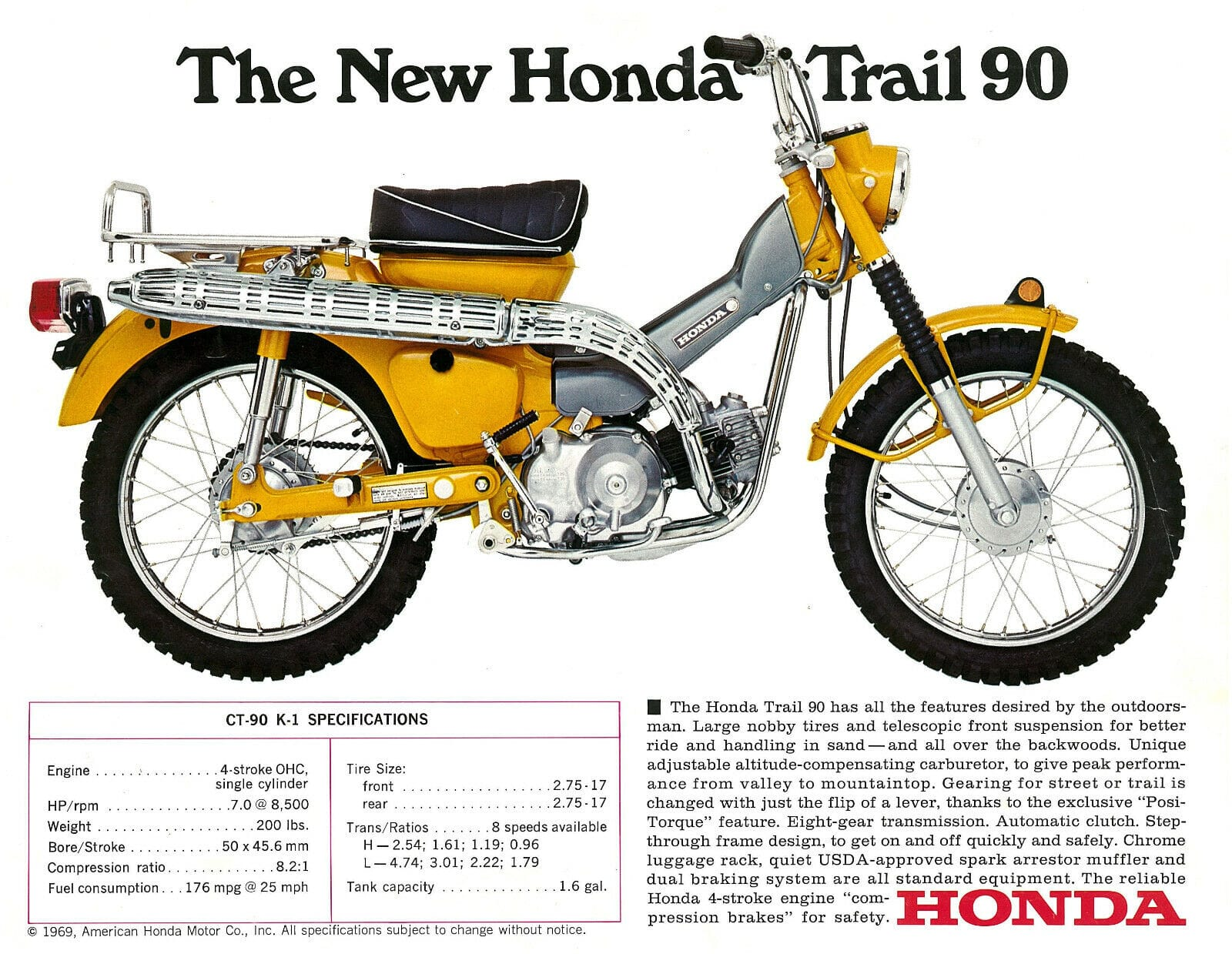
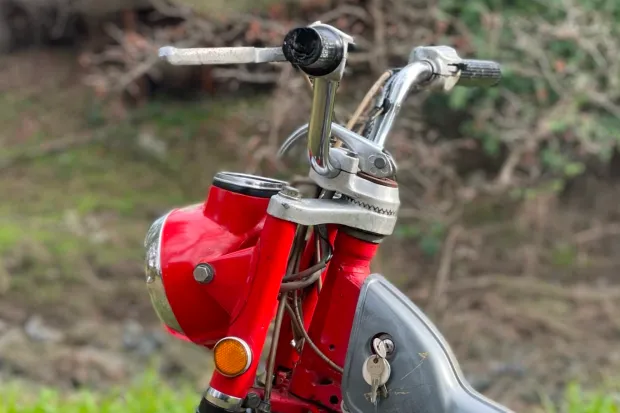
- Firstly the incorporation of telescopic forks, which increased the travel of the suspension over the original leading link forks.
- The air filter arrangement was also remodelled, moving the unsightly and testicle-endangering airbox from the down tube to the right hand side. This new design aimed to balance the cleaner lines of the bike keeping whilst keeping air intake high enough to reduce the risk of water getting drawn into the engine.
- There were improvements to the carburettor too - the new model included a high altitude adjustment knob for use above 6000ft: something of a curiosity for those of us in the UK - whose highest mountain is significantly lower than 6000ft - but a genuine boon for the millions of folk in the US who either live at this elevation or regularly travel there.
- New handlebar lock
- Foldable passenger foot rests
- Later in 1969, the bikes came with a wider 3'' front tire, which became standard for the remainder of the models.
It is worth noting a couple of other unique features on the K1:
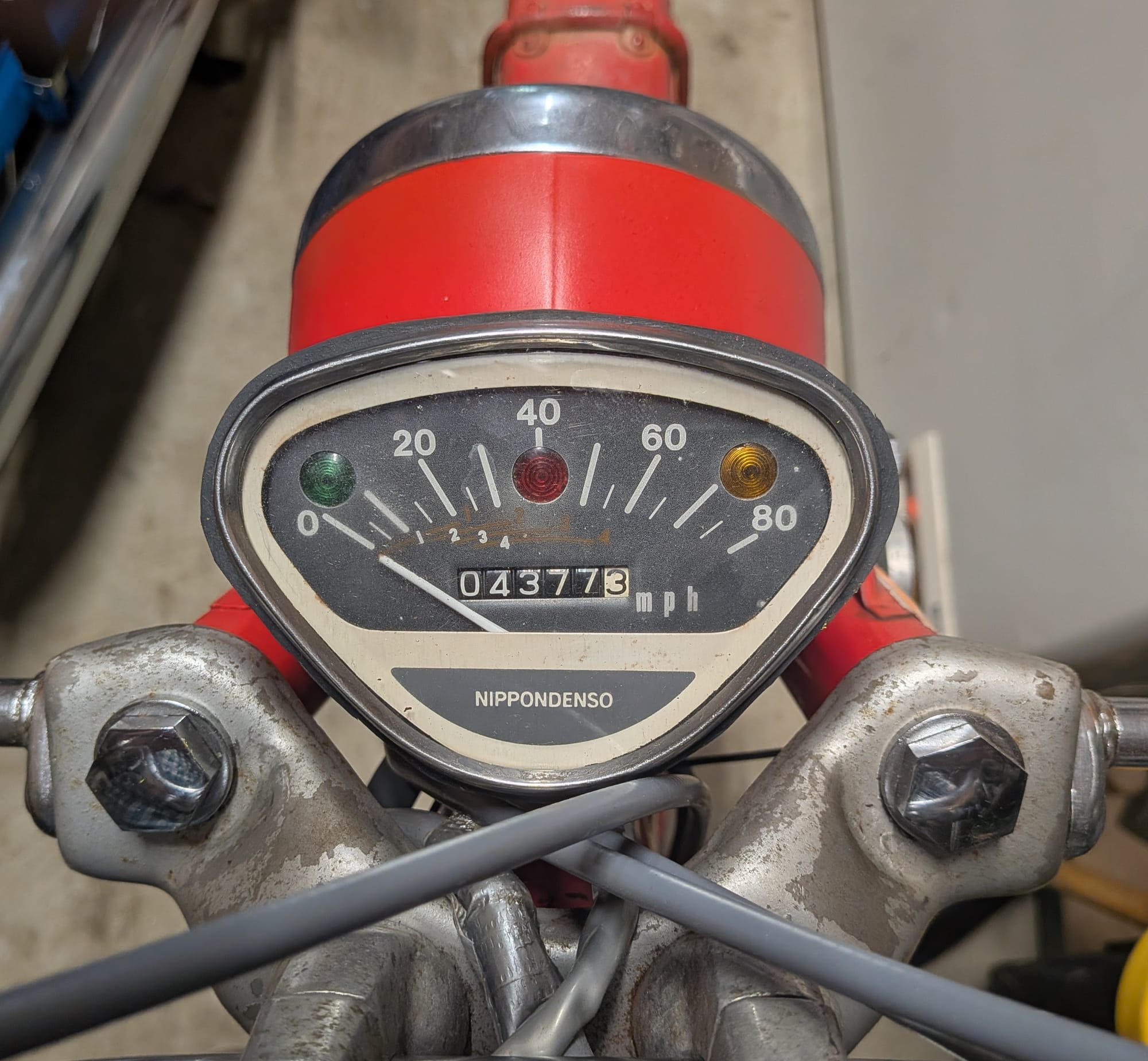
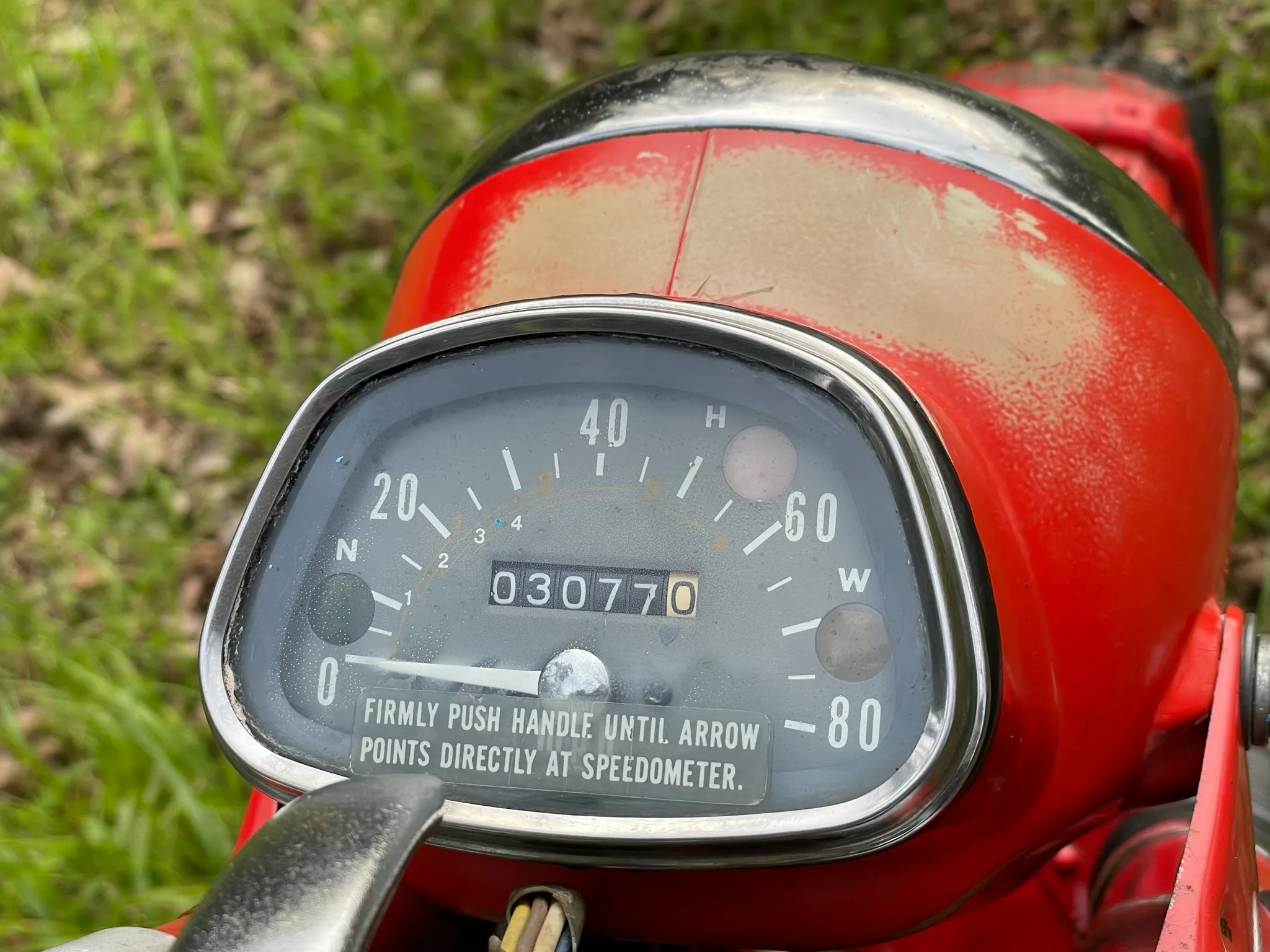
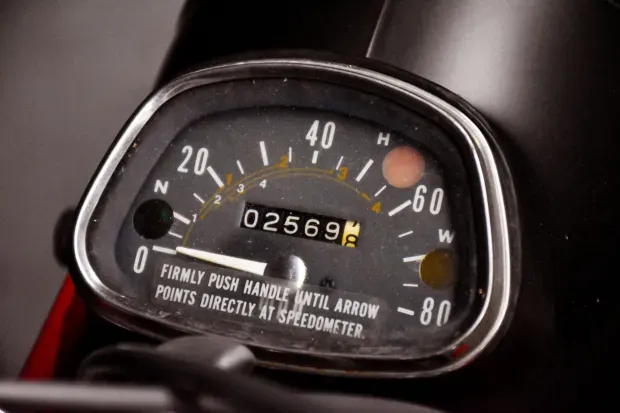
- This model has a one-year-only headlight bucket, fork-ears and speedometer design (borrowed from the S90 range of the same time)
- The early run of bikes came with a one-time carb design - recognisable by the 4 screws holding on the float bowl and offset inlet pipe mounts. You can read more about the various carbs used on the CT90s here.
Engine updates
The intake port in the K1 cylinder head was increased to 20mm (18mm on the K0) and the old pinion style kick starter was replaced with a new design, resolving a common issue where the ratchet could over-rotate and cause serious engine damage. The K1 also came with the first of several attempts by Honda to improve the cam chain tensioner.
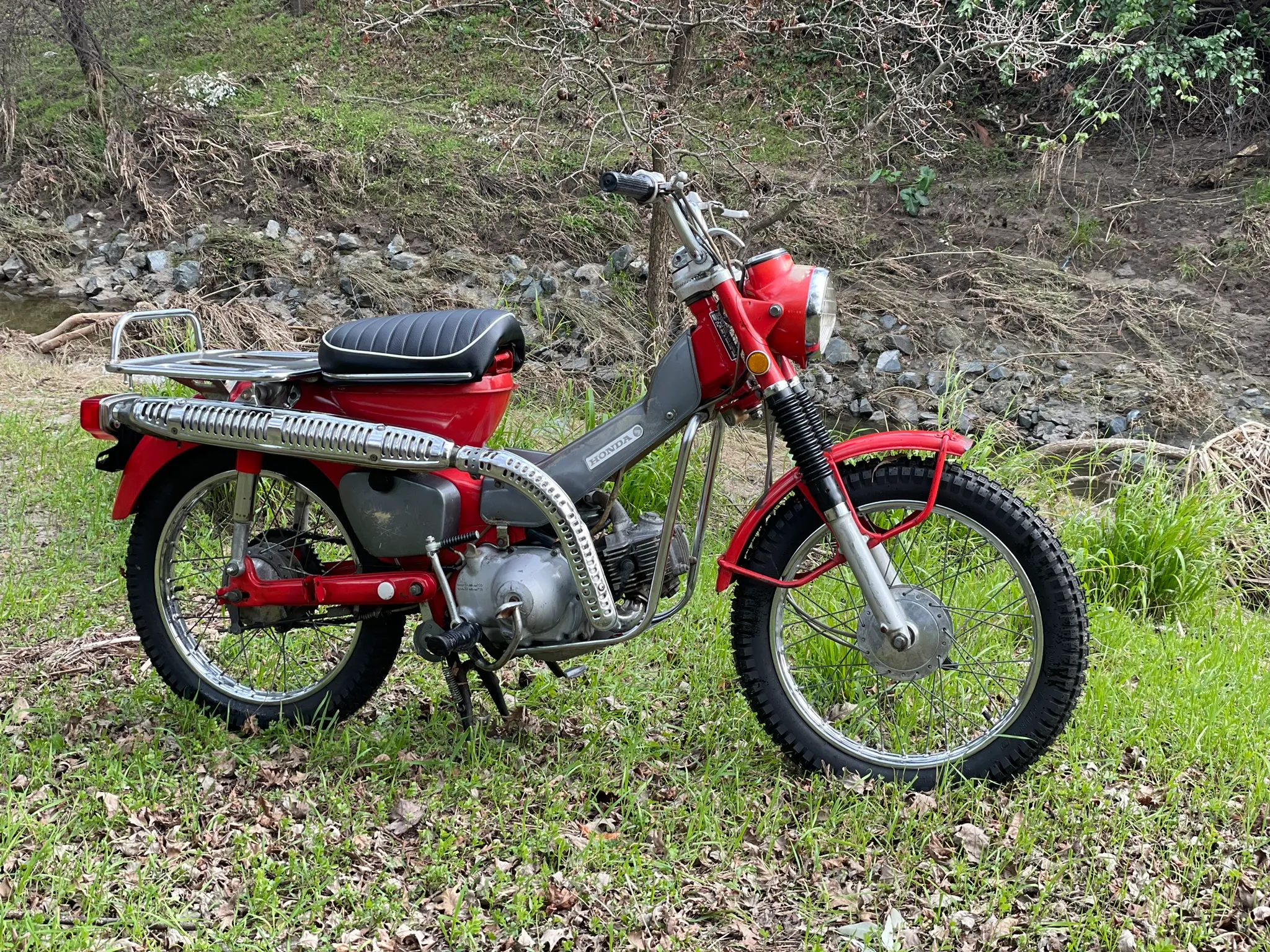
The bikes came in Scarlet Red or Yellow.
To mark the new design Honda restarted the serial numbers stamped on the engine and frame at zero, hence the references to Frame No. 000001A on the parts and wiring diagrams for the K1 models. In practice, from this point forwards, Honda prefixed the serial number with a single digit number indicating the year of manufacture, starting with the 200000 range for the K1, 300000 for K2 and 400000 for the K3.
1970 - CT90 K2
There were several changes in the following year:
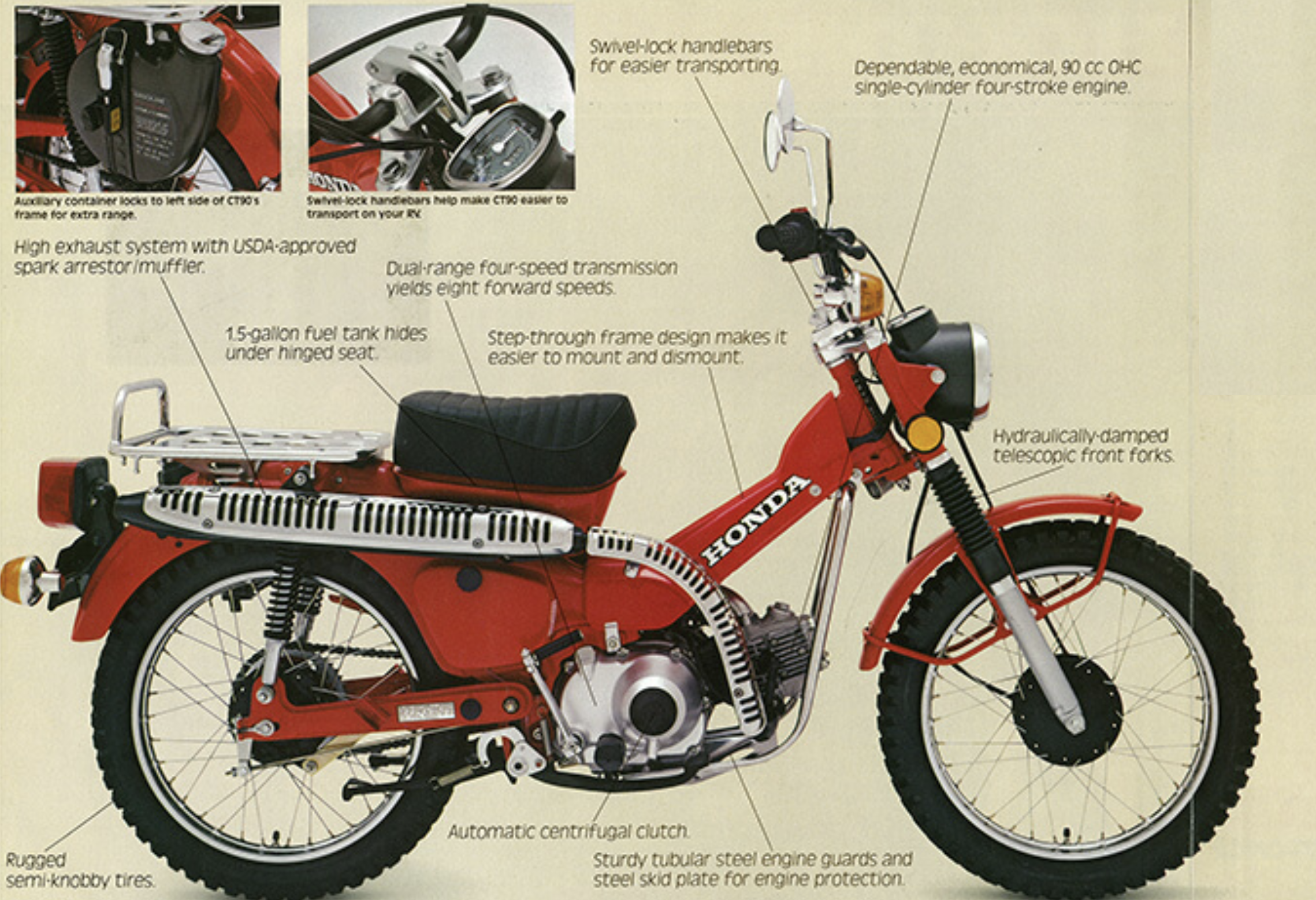
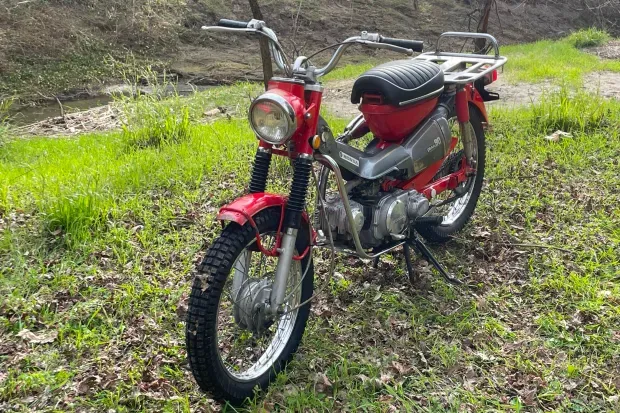
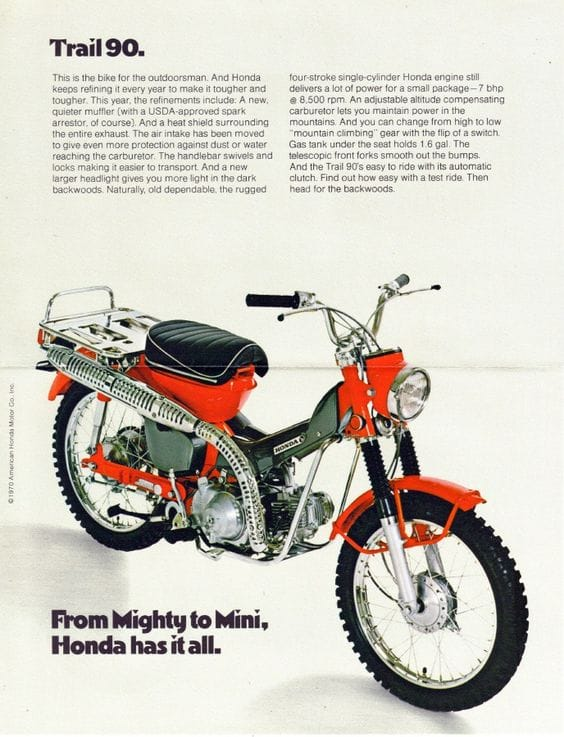
- a larger headlight (now a sealed-beam unit), redesigned speedometer, new foldable swivel-lock handlebars, and redesigned muffler guard. Body colours remained unchanged, but the side panel was now grey.
- The air cleaner intake was moved from the side of the frame and now connects to the underside of the carrier rack - a rather less aesthetically pleasing arrangement, but one that raises the intake a few more inches above any potential water ingress.
- The exhaust heat shields were updated so the exhaust pipe cover now extends to below the engine
- One final tweak was the replacement of the front brake light actuator which - on the K1 - involved an unwieldily mechanical switch spliced into the brake cable - with a simpler spring loaded mechanism that is fitted in the lever mount.
The bikes were Scarlett Red or Bright Yellow.
1971 - CT90 K3
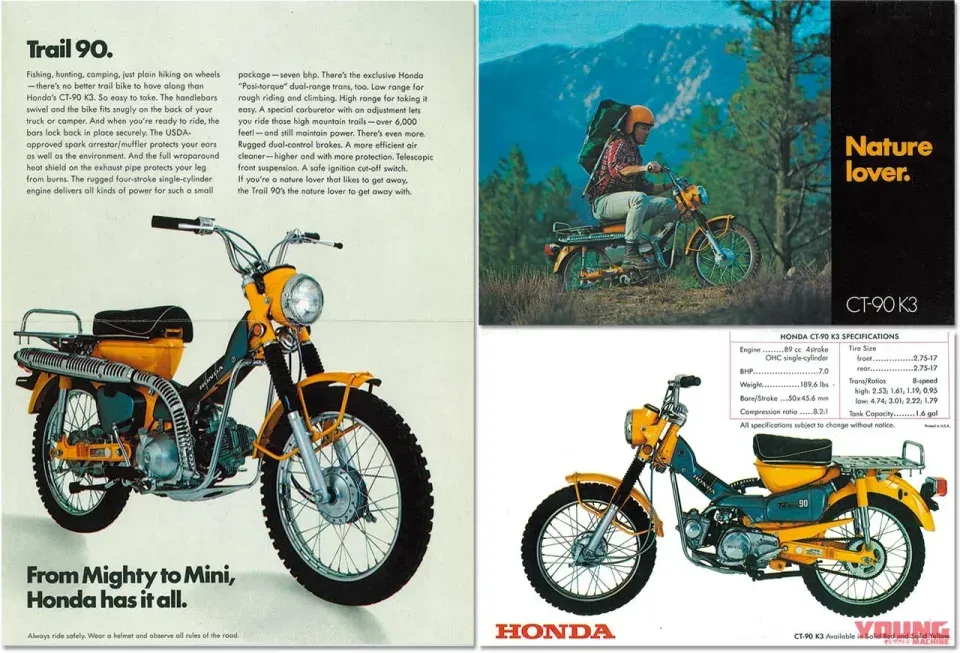
The chrome muffler coating was changed to a heat-resistant matt black, and a vertical black bar was added to the grey plastic frame tube shroud. The colours are Scarlet Red or Summer Yellow.
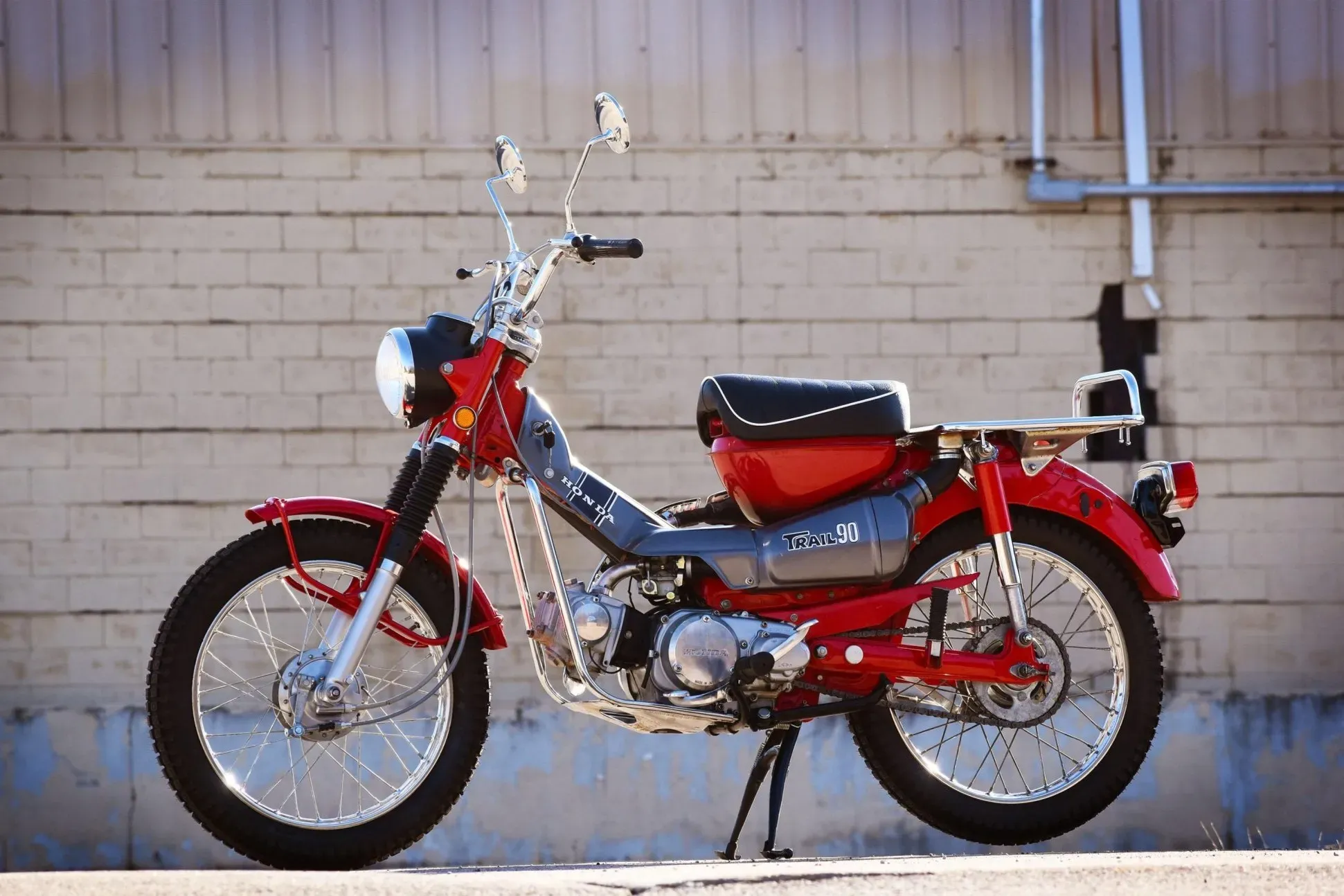
1972/73 - CT90 K4
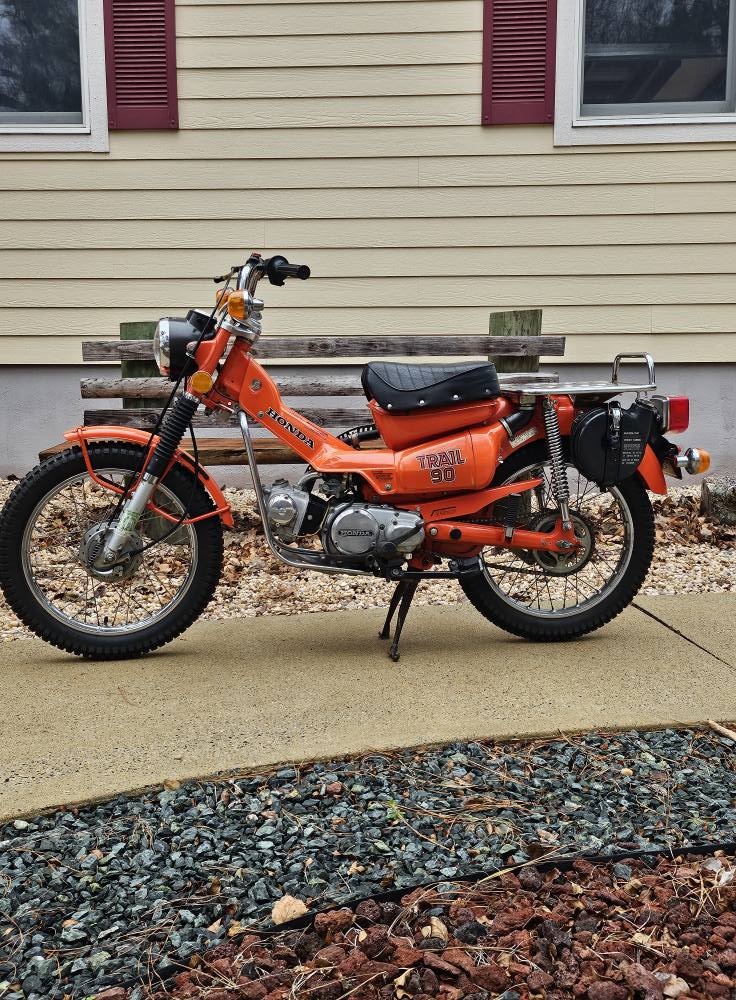
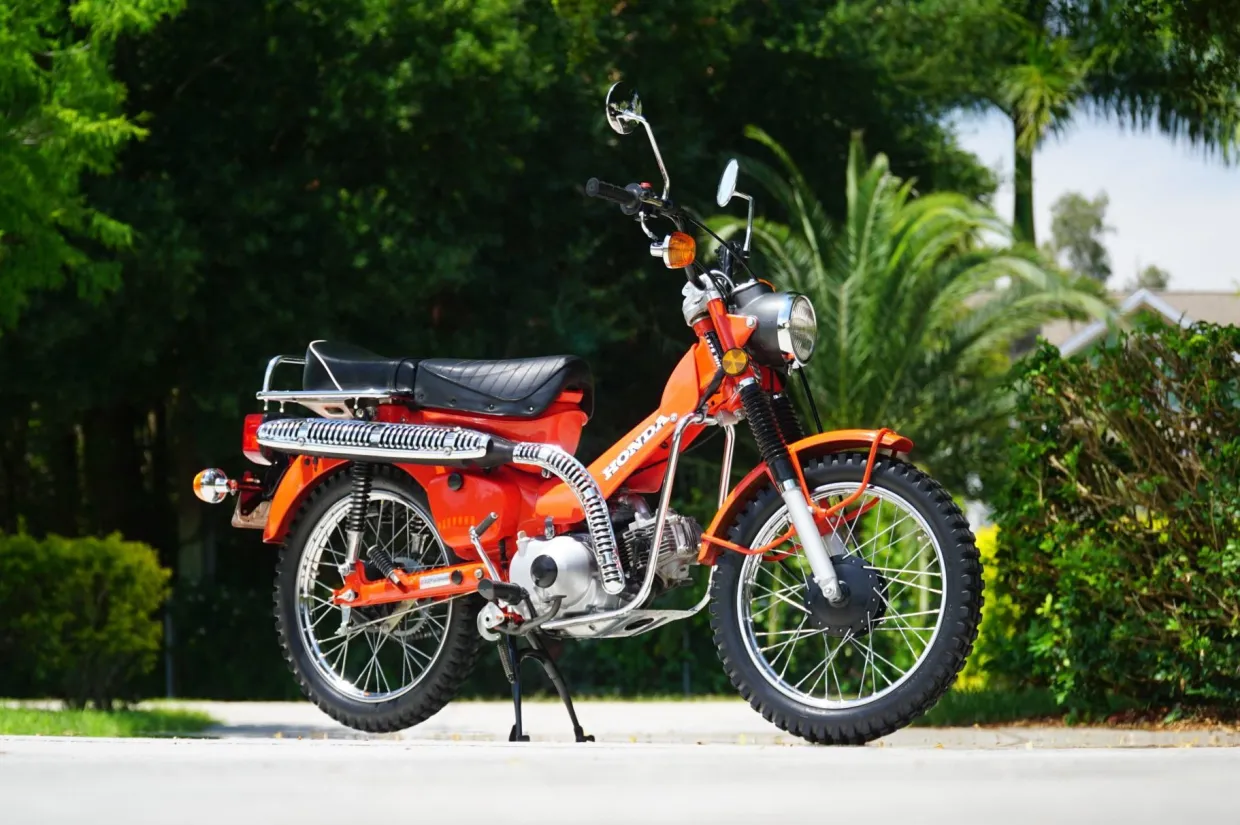
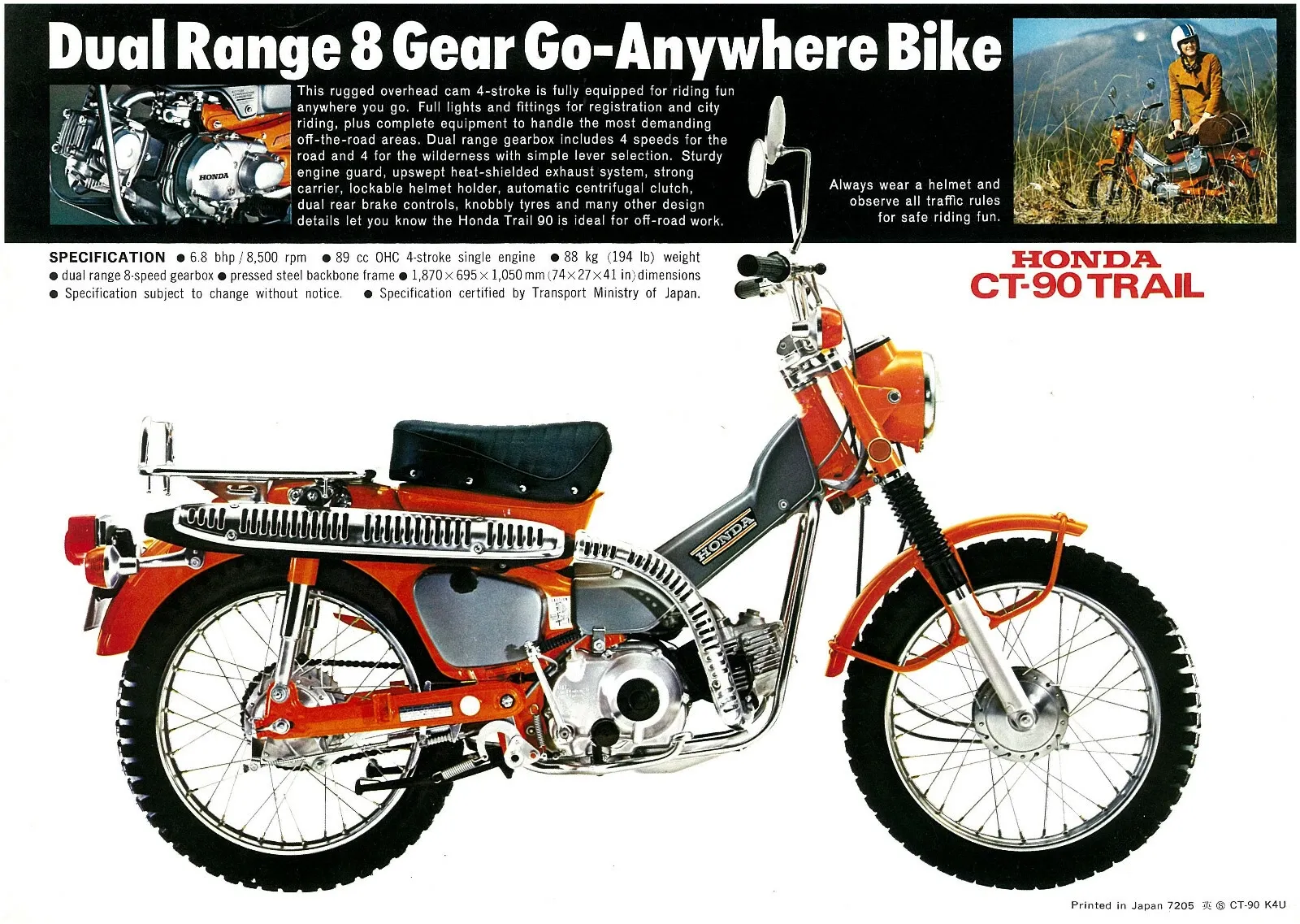
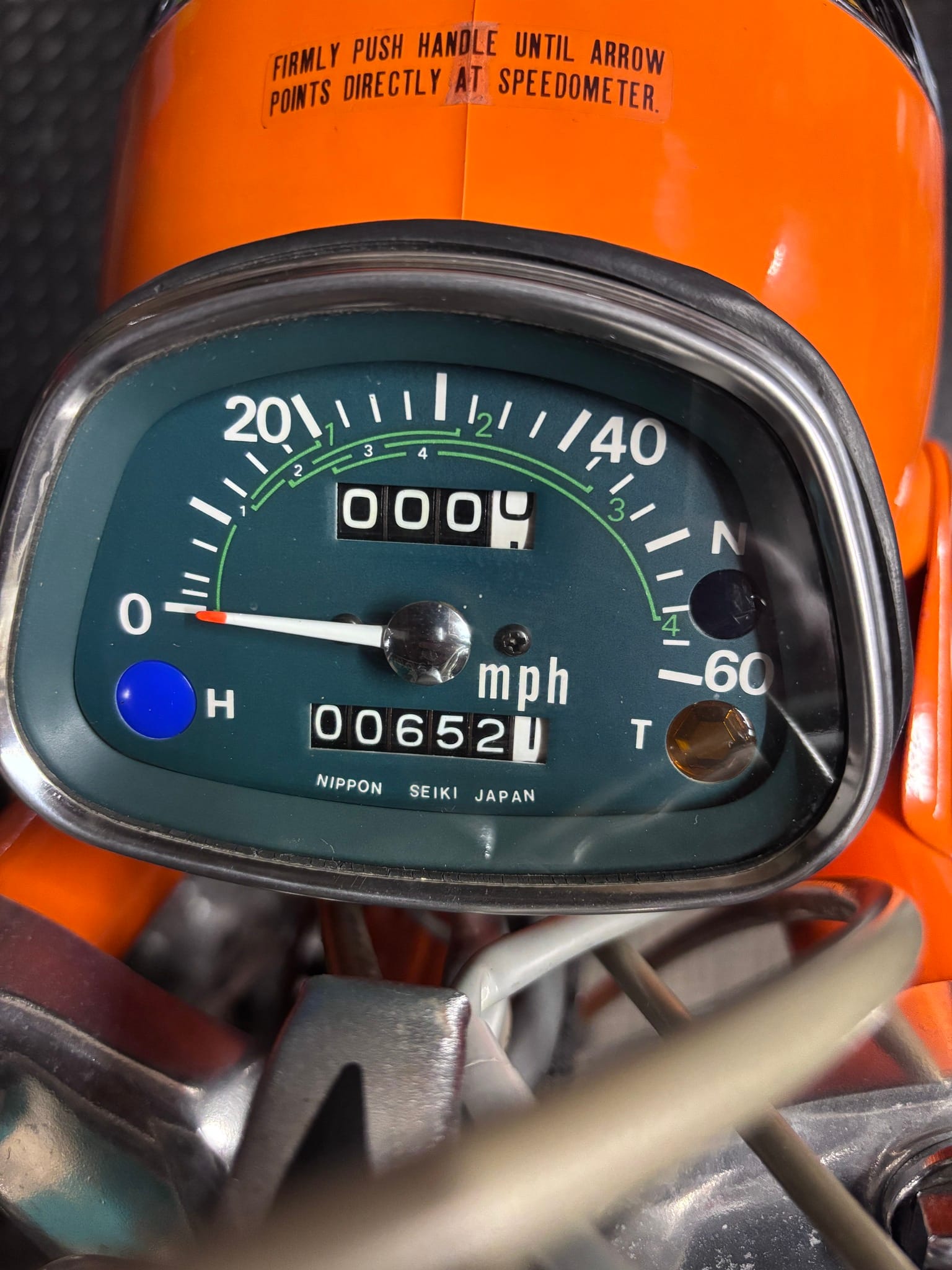
Now available in distinctive Mars Orange.
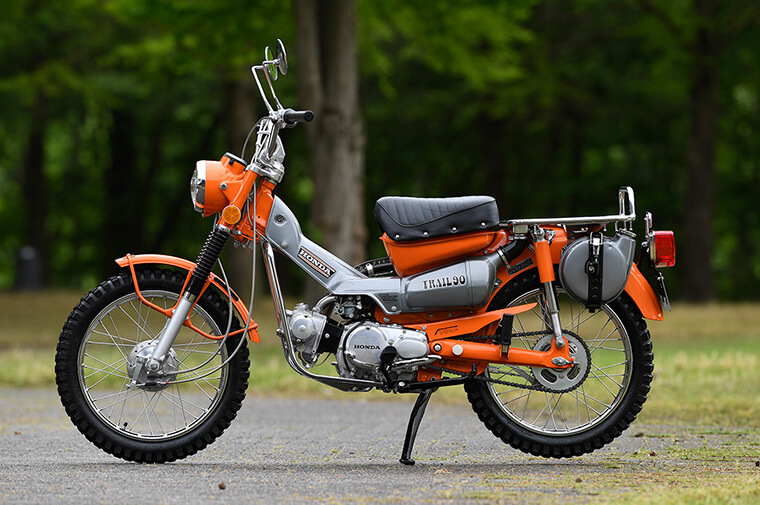
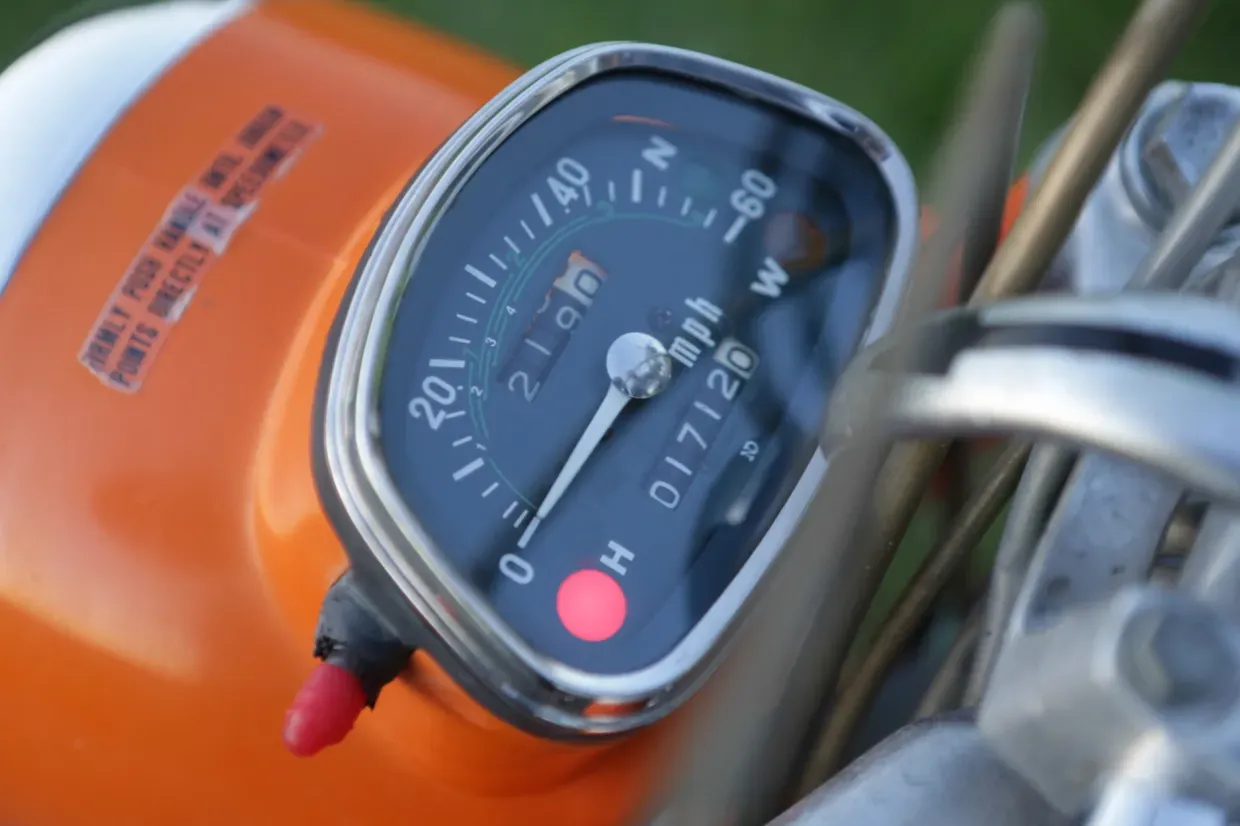
mars orange (left) / new speedo design (note the "W" for winkers)
- The newer seat and tank design, recognisable by the chrome rivets, allows a wider and better upholstered seat at the expense of a little tank fuel capacity (now down to 1.5 gallons).
- The auxiliary fuel tank (shown above), became standard equipment on the left side of the rear carrier.
- Larger rear light
- trip odometer added to the speedo and the max speed stops at a more realistic 60mph.
- the '73 version came with a black plastic cover over the clutch adjustment nut in the right hand engine case.
As a result of the introduction of the kill switch, there are two versions of the wiring harness:
- 1969-73 (K1-K4)
- 1974 onwards (K5 and later)
The two version are easily distinguishable by the number of connections in the section of the harness terminating in the headlight bucket (the earlier version has 10 connections and the later has 12).
Turn signals were still available as an optional extra, although these would become standard the following year:
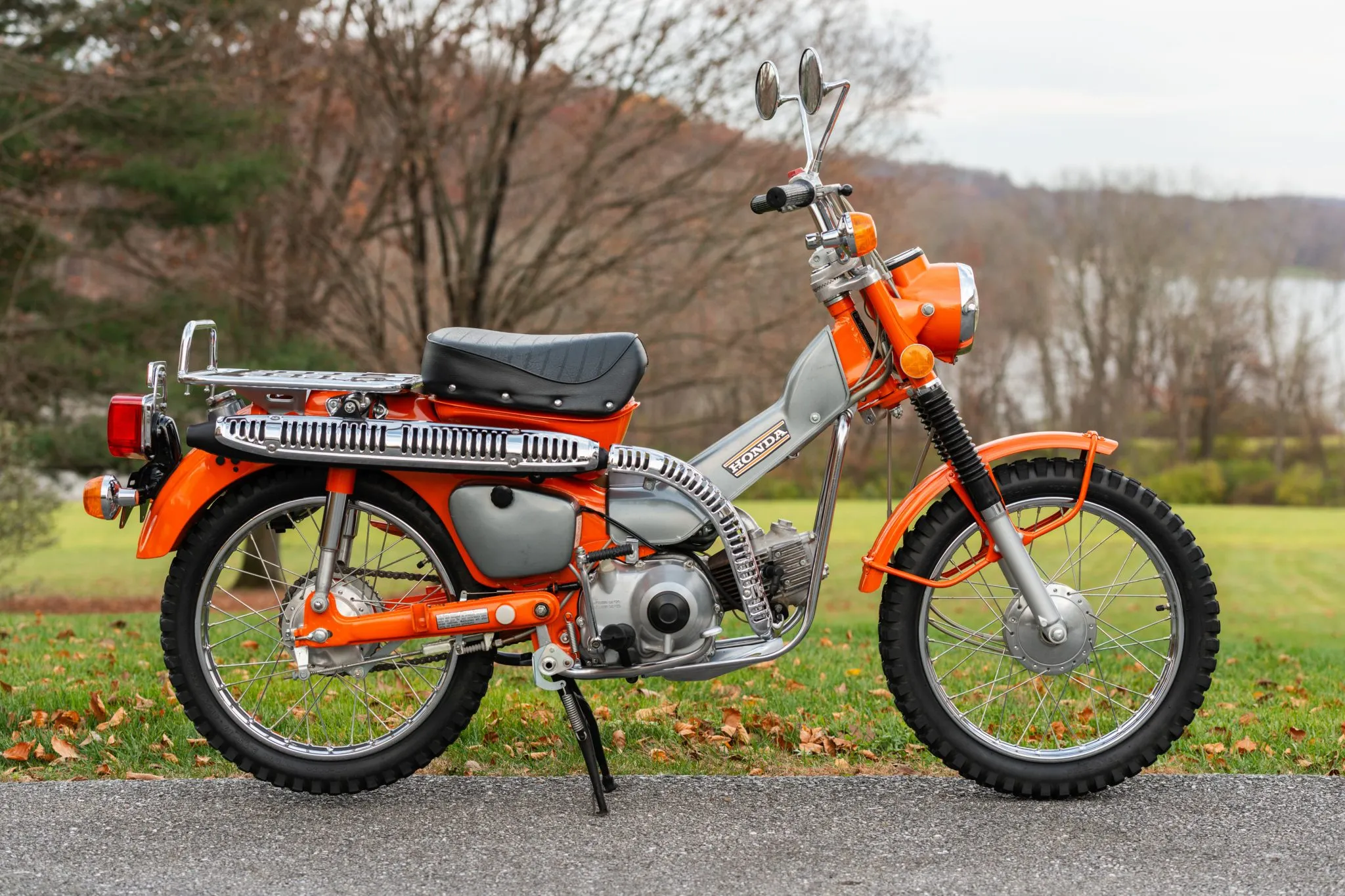
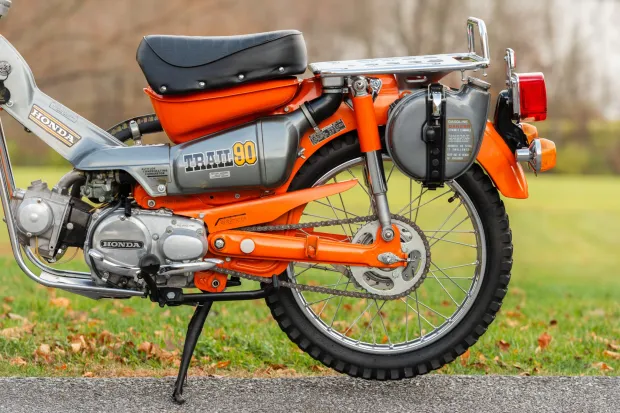
1974 - CT90 K5
A few changes on the electrics
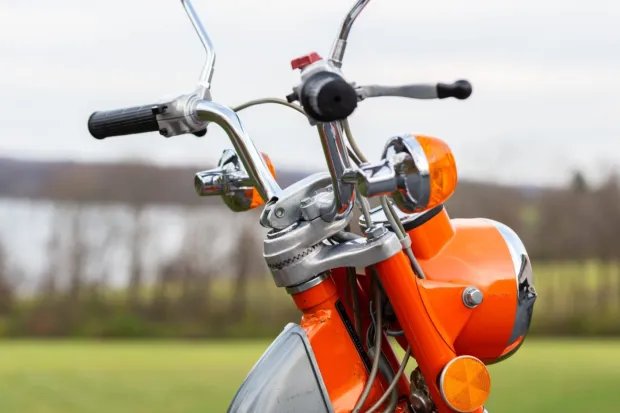
- new kill switch introduced
- new silicon rectifier (replacing the old orange-finned selenium version)
- turn signals become standard equipment
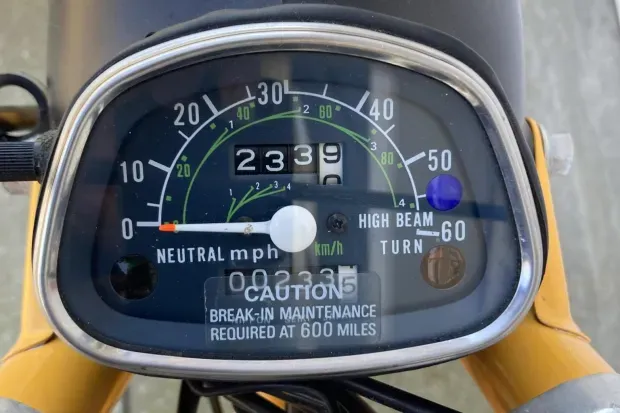
A couple of tweaks to the speedo - the highbeam indicator is now blue, rather than red, and winkers are labelled 'T' (turn signal) rather than 'W'.
So that the rear turn signals and auxiliary tank could be used together, Honda had to move the rear indicator mount from the rear mudguard/fender to a rather more precarious position on the rear light/registration plate bracket. Still in Mars Orange.
As a result of the introduction of a kill switch in 1974, there are two versions of the wiring harness:
* 1969-73 (K1-K4)
* 1974 onwards (K5 and later)
The two version are easily distinguishable by the number of connections in the section of the harness terminating in the headlight bucket (the earlier version has 10 connections and the later has 12).
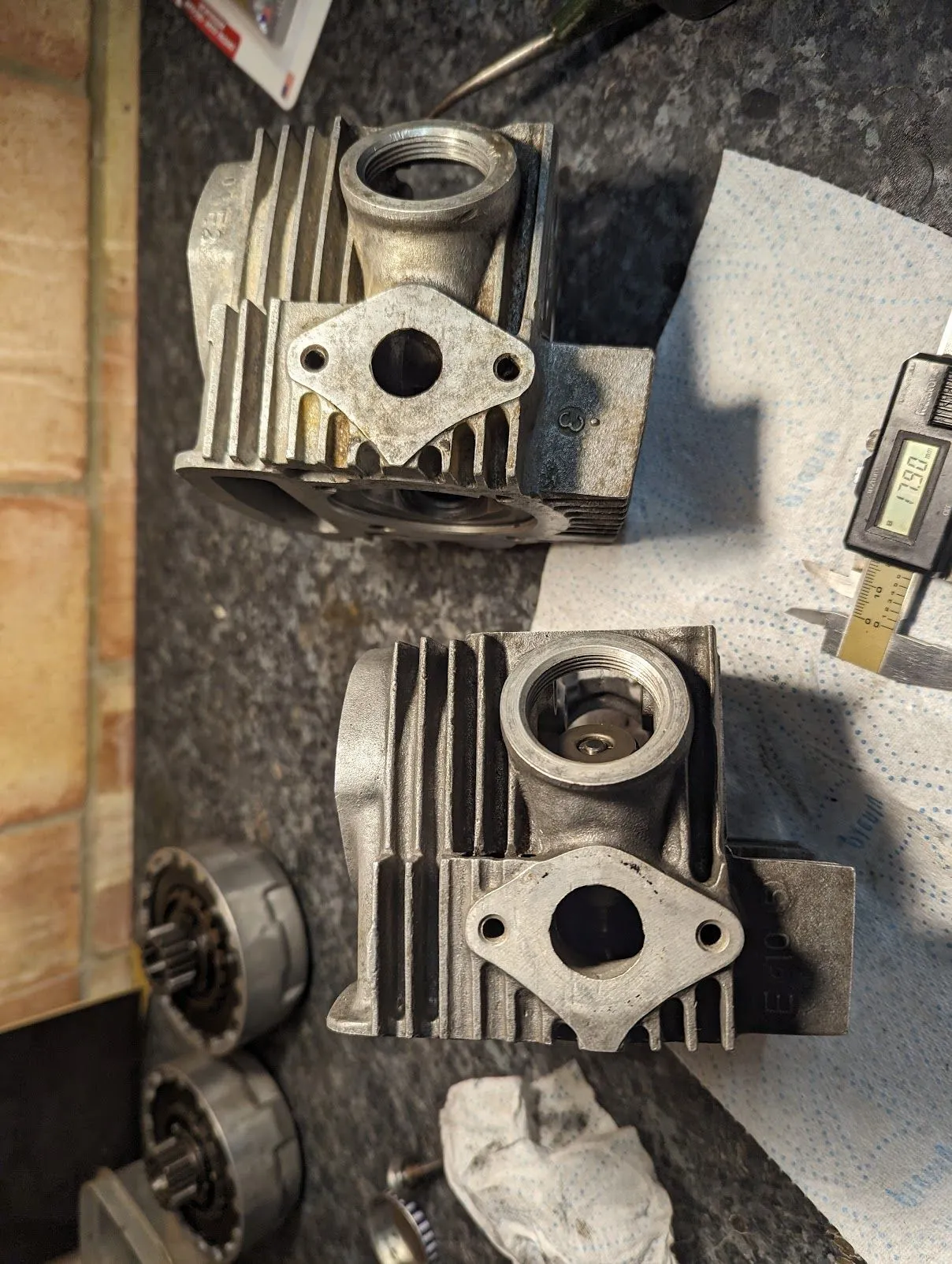
The 1974 also got a redesigned cylinder + cylinder head:
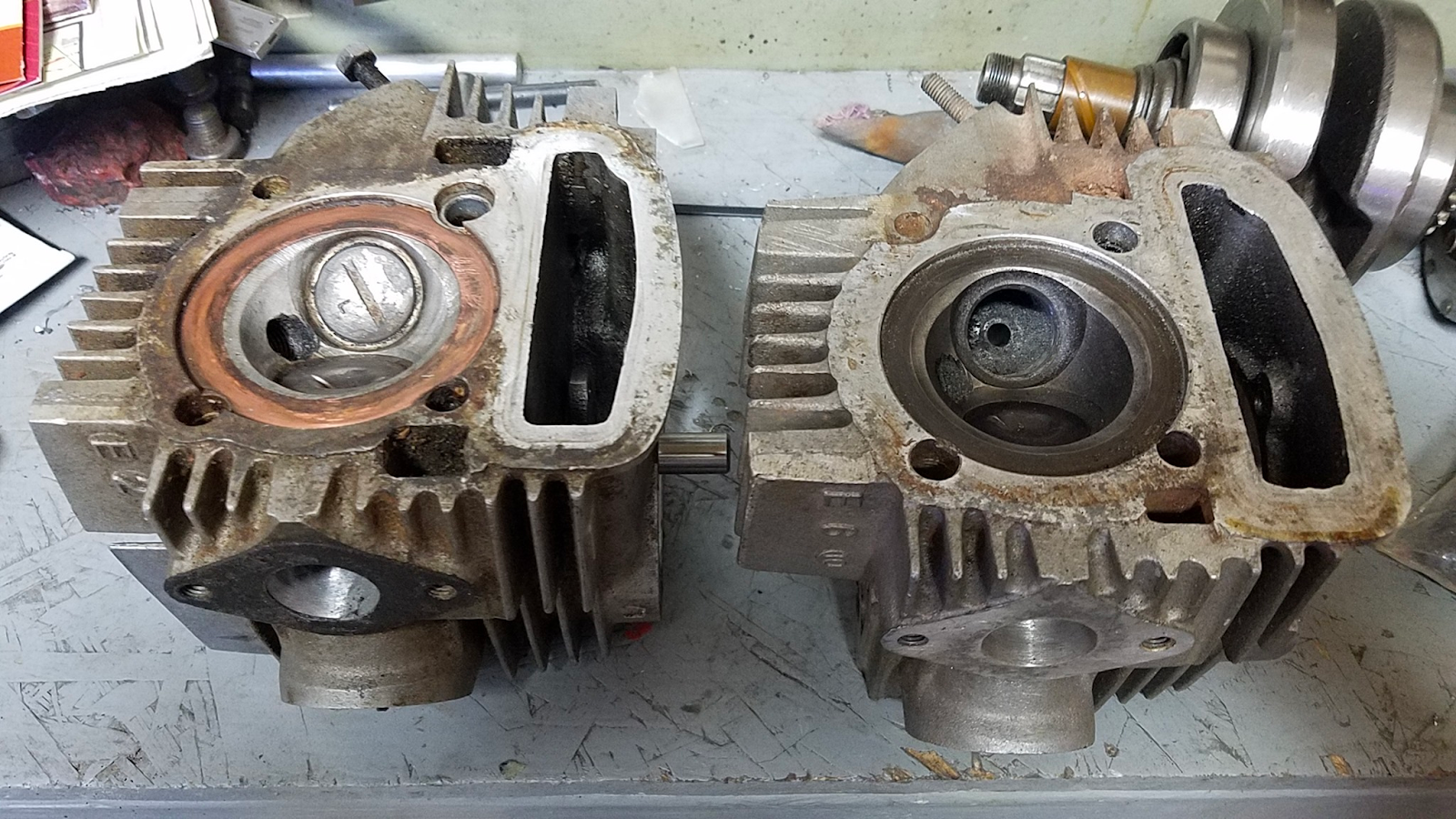

left: the new 1974 all-aluminium head next to an earlier "iron skulled" version / right: Honda redesigned the cylinder at the same time as introducing the all-aluminium head
The thicker cylinder walls of the new version (shown on the left of the pictures above) required a new copper cylinder head gasket with notches to avoid the cylinder head studs. These changes mean that the newer aluminium head is not compatible with the cylinders used on the earlier bikes.
1975 - CT90 K6
Body colour changed to Tahitian Red, with matching frame shroud and side covers and black Honda logo.
- Black headlight bucket.
- The gear shift pattern was updated so that changes to higher gears required a 'toe up' movement (in previous models it was toe-down to go N>1>2>3>4).
- Presumably as a cost saving measure, the hand control for rear brake was deleted.
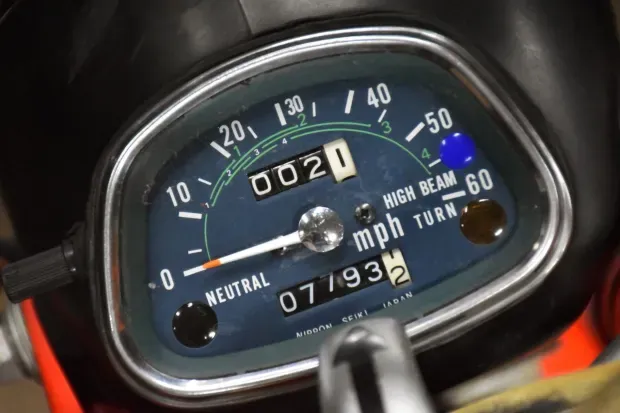
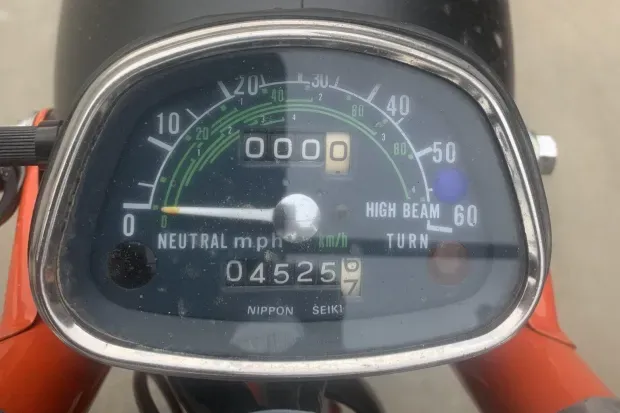
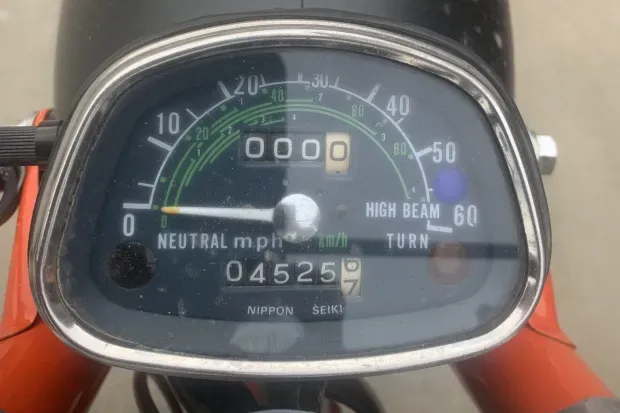
- Yet another tweak the layout of the speedometer (note the indicator lamps are now spelled out, 'NEUTRAL', 'HIGH BEAM' and 'TURN'
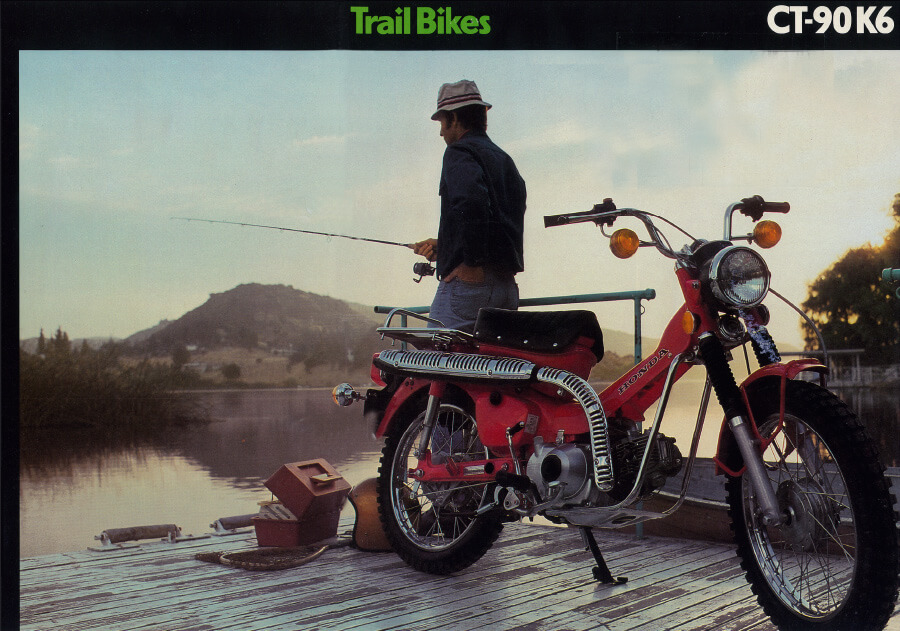
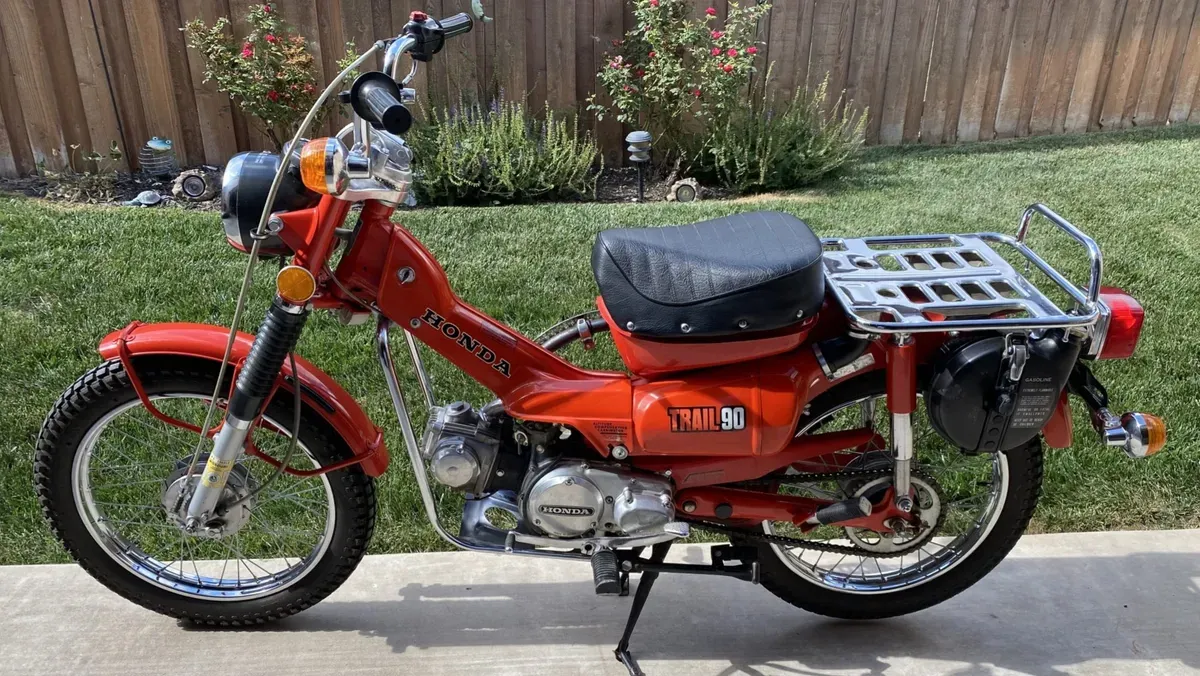
The early K6 models came with new black switch gear organised with the kill switch and on/off controls for the lights controls on the right and the turn-signal, horn button and dimmer functions on the left.
At some point in 1975, Honda rearranged things so the headlight and taillight were permanently on, reflecting changes to US federal requirement around this time. Consequently the redundant headlight on/off control was deleted from the right hand switch.
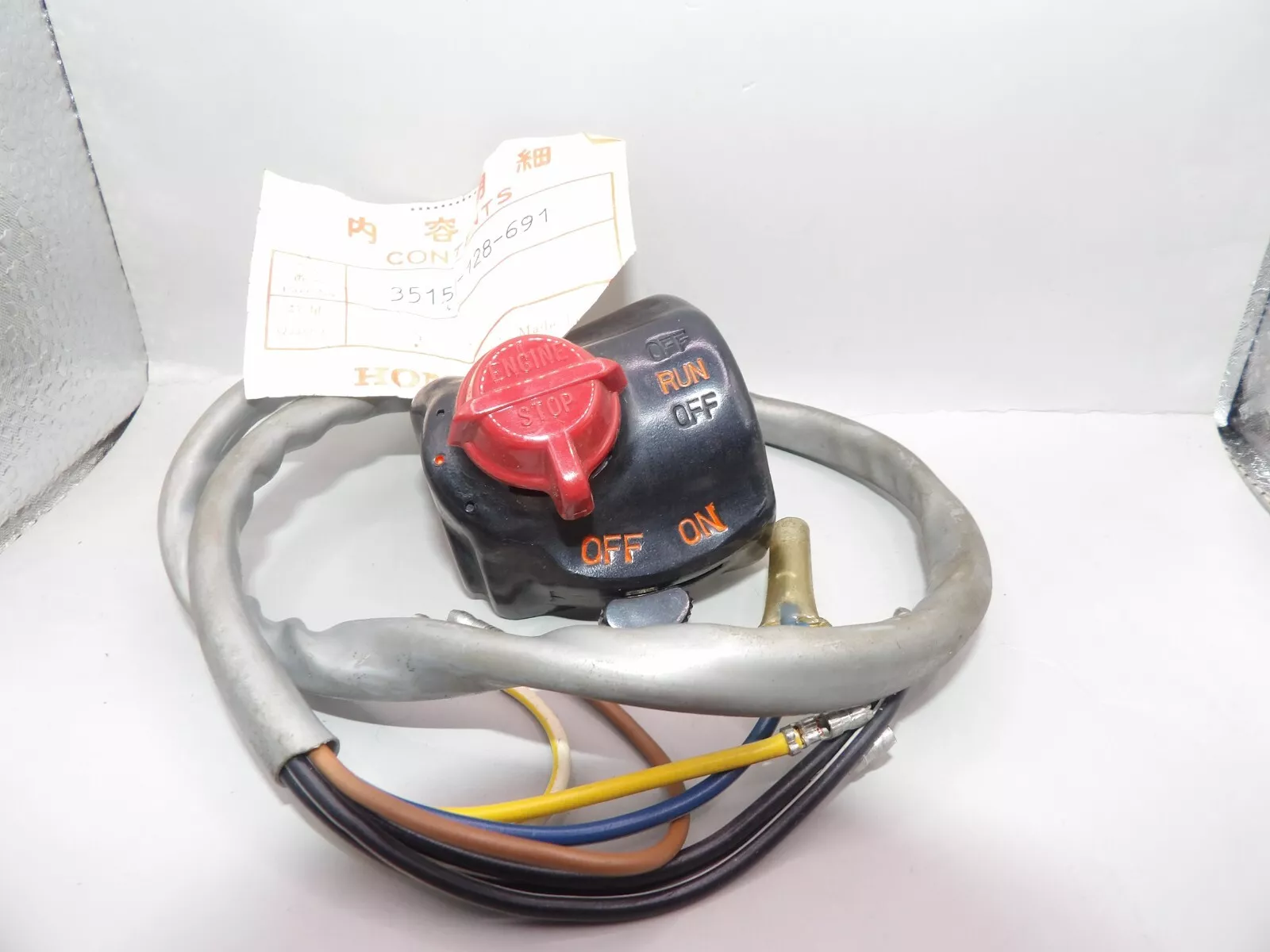
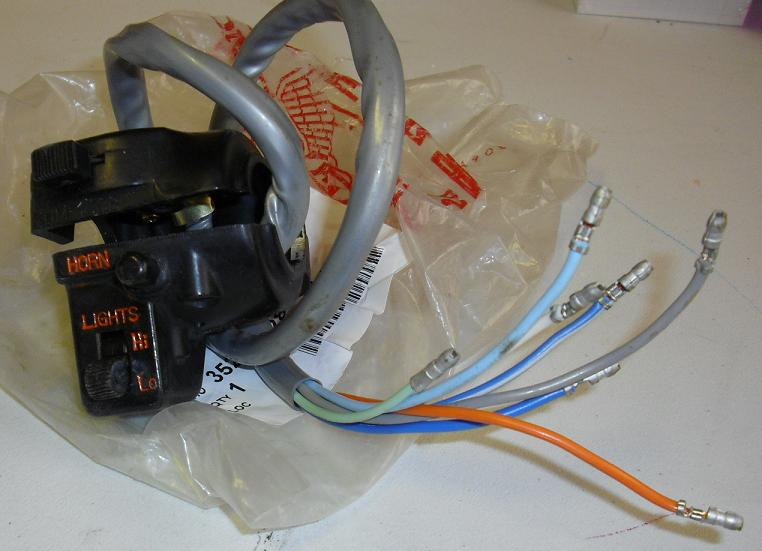
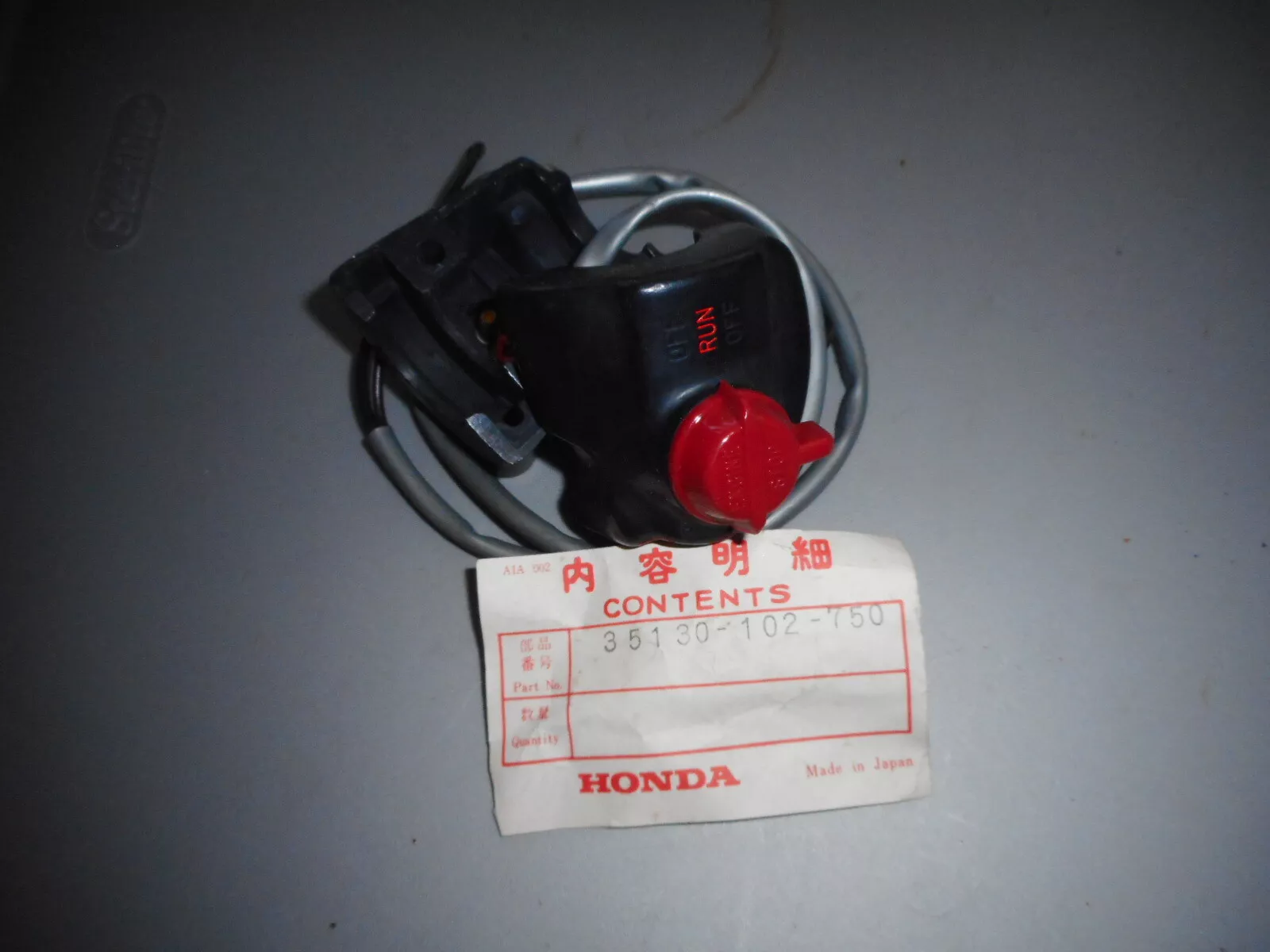
(left) kill and main light switch combined on earlier k6 models / (center) the later fat-finger-unfriendly horn/dimmer/turn signal left hand switch / (right) new kill switch
The change to 'always on' lights necessitated a change to the way the charging system was hooked up - if you are interested in what changed, see here.
1976 - CT90 K7
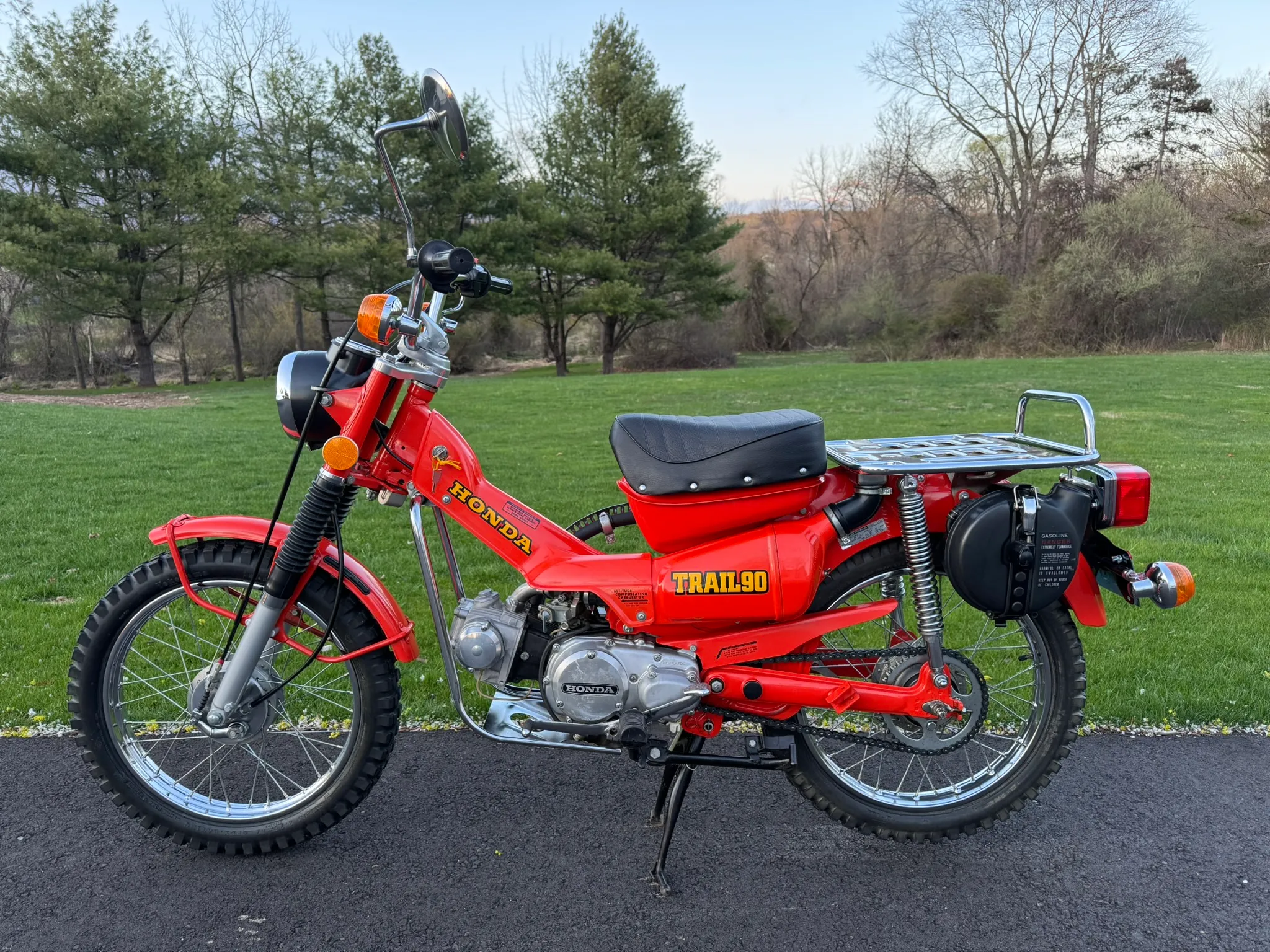
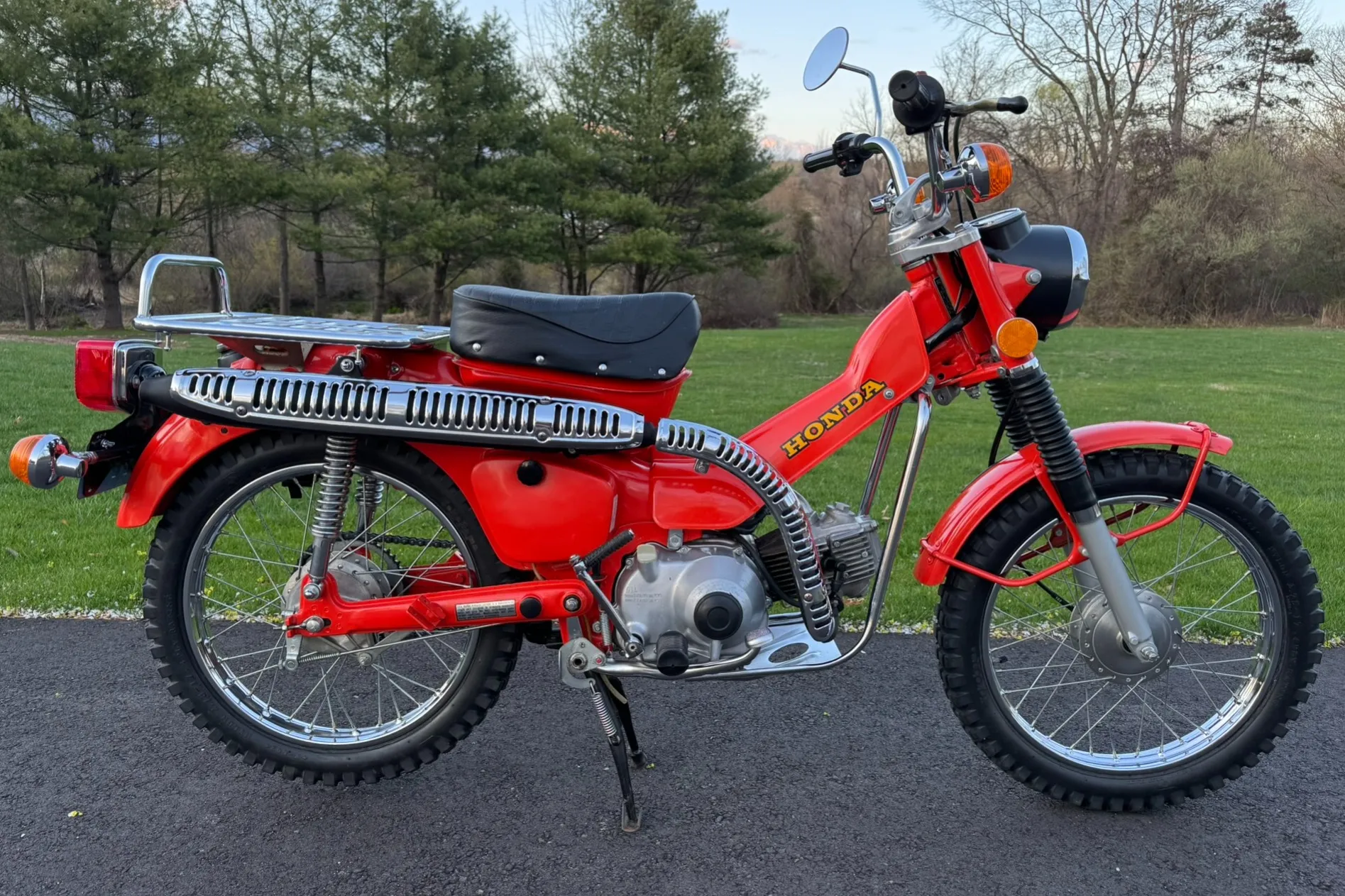
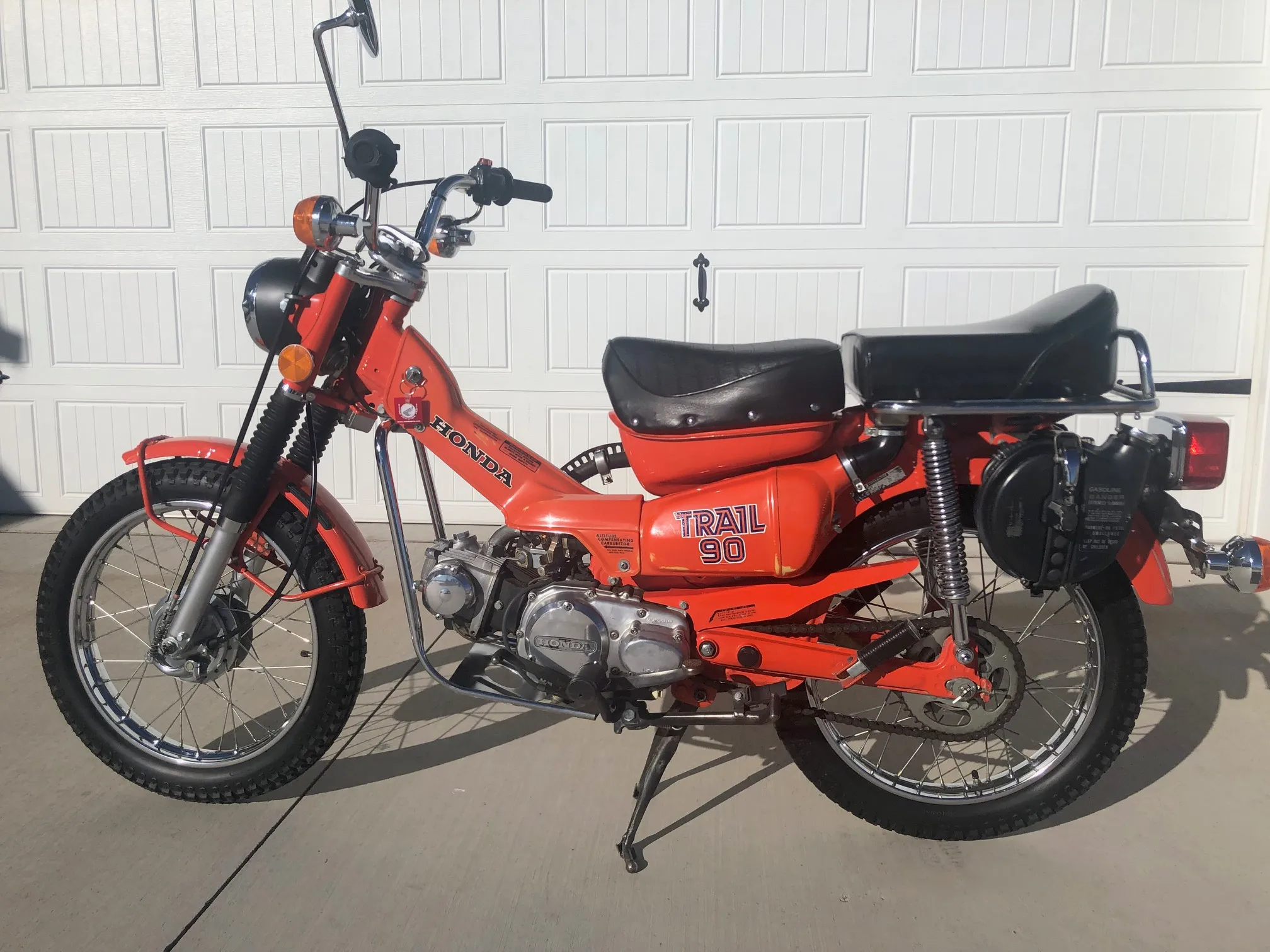
Exposed chrome rear shocks. Body colour changed to Shiny Orange, with yellow Honda logo.
1977 - CT90 K8
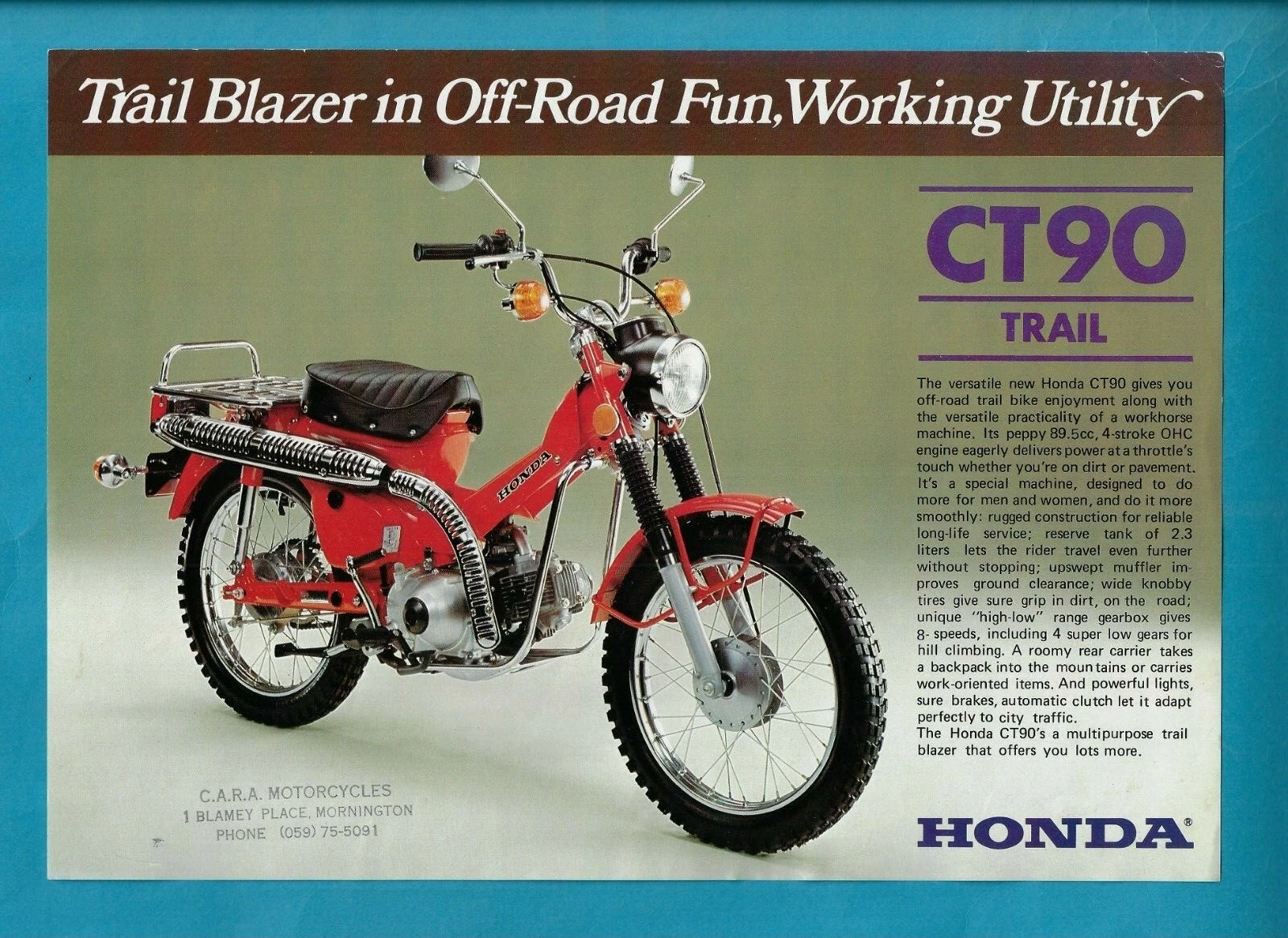
The only changes for the K8 were the minor decal changes shown below (still in Shinny Orange).
The gear change indicators for both high and low gears were crammed onto the speedo face - a short live experiment as it made it very hard to read..
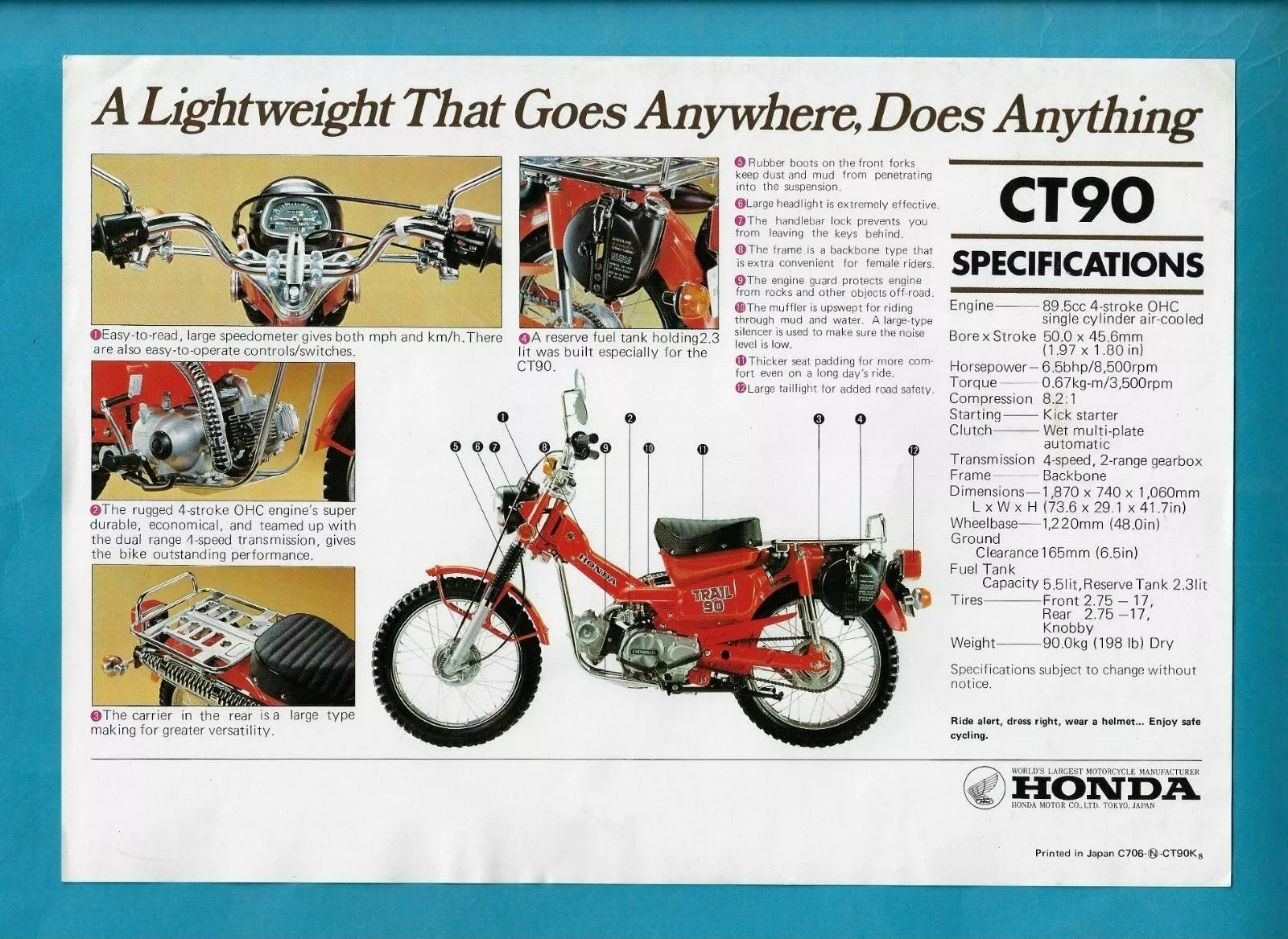
Note the K8 advert on the left shows the old style shocks
1978 - CT90 '78
The 1978 model saw the end of the K numbering series.
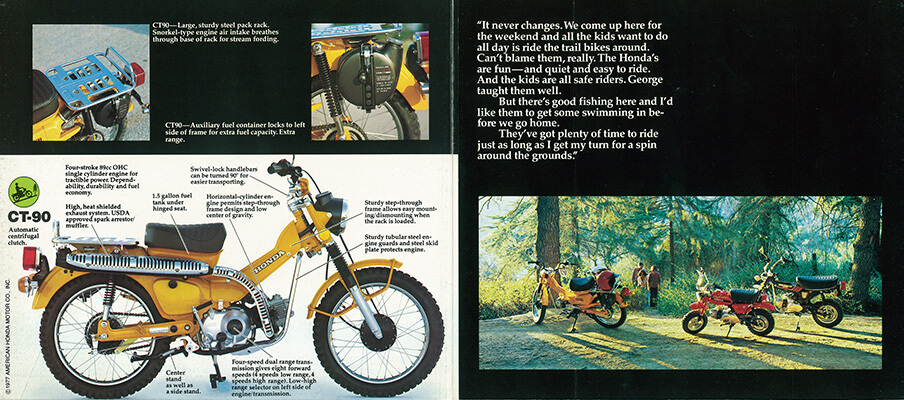
- From this point on the bikes no longer came with high altitude adjusters on the carbs. The new PB round bowl carbs were introduced at the same time as a modified engine breather arrangement so that any unburnt hydrocarbons blown past the piston rings are redirect back into to the air intake.
- The rear shocks get another redesign, this time with an external spring.
- The shock springs and wheel hubs and handlebars are all painted black.
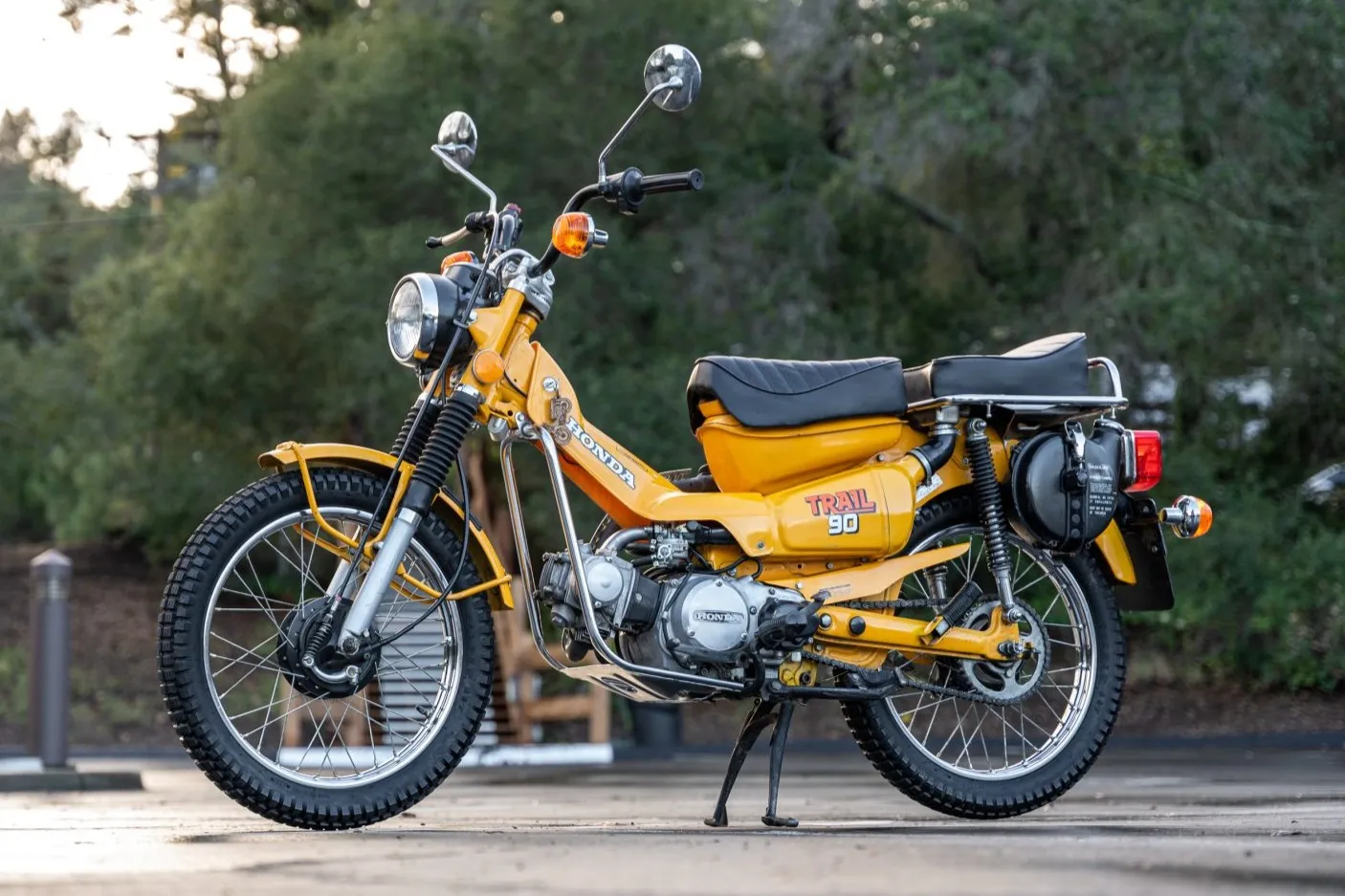
- Improved speedo layout with the low range gear change indicators repositioned so they are easier to read.
Yours in any colour you like so long as its Bright Yellow!
1979 - CT90 '79
Back to Tahitian red and the last of the CT90s. Honda went on to extend the 90cc engine to 110cc and the sold the new CT110 models in the USA well into the 1980s. The CT110 was still on sale in Australia in the early 2010s - not a bad run!